

Caught Between Innovation and Indecision
Today’s businesses are navigating a high-stakes crossroads. On one side lies the promise of personalization technology—a key to unlocking hyper-relevant experiences and driving unmatched loyalty. On the other side? The fear of missteps, sunk costs, and chasing trends that don’t deliver. This dichotomy leaves decision-makers questioning: is investing in the latest personalization tech a necessity or an indulgence?
The Stakes Have Never Been Higher
The reality is stark. Businesses without advanced personalization tools risk losing relevance in an era where tailored experiences are the expectation, not the exception. Yet, with finite resources and increasing scrutiny on ROI, the cost of getting it wrong can be crippling.
This blog explores the full spectrum of the cost-benefit equation—dissecting not just the price tag of adopting personalization tech but the opportunities it unlocks and the risks of standing still.
The Business Case for Personalization Technology
The business world has shifted. What once was a “fancy-to-have” is now a make-or-break differentiator. Both B2B and B2C industries are racing to embed personalization at every touchpoint, fundamentally reshaping how brands connect with their audiences. In fact, industries like eCommerce and SaaS are already capitalizing on these shifts, proving that data-driven experiences aren't just a trend—they’re the new norm.
Data isn’t just power; it’s potential. Personalization transforms static insights into dynamic connections, helping brands anticipate customer needs before they arise. Companies that master this stand to gain an edge that competitors may find impossible to replicate.
What’s Fueling the Revolution?
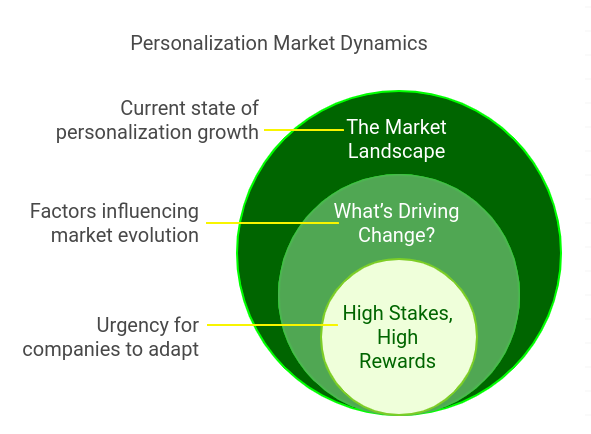
- Customer Journeys Have Outgrown Linear ThinkingOnce predictable paths have splintered into a maze of digital touchpoints. Buyers no longer browse in silos—they jump from ads to social posts to review sites before making decisions. Personalization tech empowers brands to meet customers wherever they are, crafting cohesive narratives across fragmented journeys.
- The Age of Instant GratificationReal-time is the new standard. AI and automation have trained consumers to expect instant solutions, personalized recommendations, and seamless interactions—all within milliseconds. Companies that fall short risk losing attention (and revenue) to savvier competitors.
Scaling the UnscalablePersonalization at scale once felt like a pipe dream, but modern tools are rewriting that story. Advanced tech now enables businesses to harness sprawling datasets, extract actionable insights, and deliver nuanced experiences without exhausting resources.
The Cost of Waiting
Missed Opportunities, Mounting Risks—While the rewards are clear, so are the consequences of delay. Companies slow to adopt personalization risk falling into irrelevance, as competitors use these tools to accelerate growth, deepen loyalty, and raise the bar for customer expectations.
The Costs of Investing in New Personalization Tech
The Price Tag You Can’t Ignore
Investing in cutting-edge personalization technology often starts with a big number staring back at you. While many solutions promise transformative ROI, the upfront costs can feel daunting, especially for businesses operating on lean budgets.
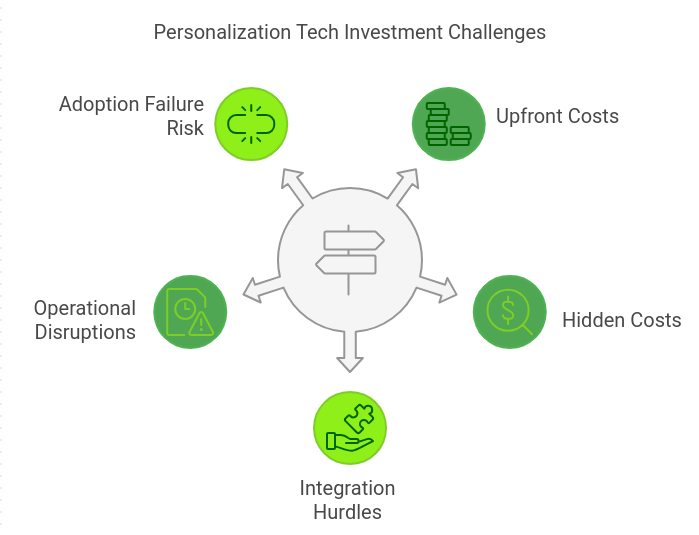
Upfront Costs
Licensing fees for robust personalization platforms can run into tens or even hundreds of thousands of dollars annually, depending on the scale and sophistication of features. Deployment costs further add to the bill, as implementation often requires IT resources, third-party consultants, or specialized engineers to tailor the software to your needs. Customizations, such as adapting the tech to unique workflows or audience requirements, can push the price higher.
When “Hidden Costs” Stop Hiding
The true cost of personalization tech isn’t always written in the contract. Training teams to fully leverage new platforms is a time-consuming and costly process, often involving workshops, certifications, or ongoing educational investments. Internal alignment is another overlooked expense—getting marketing, sales, and IT teams on the same page can drain resources and delay deployment.
And then there’s the elusive time-to-market factor: the period between adoption and when the tool actually delivers measurable results. For some organizations, this delay can stretch for months, costing more in missed opportunities than the tool itself.
Integration Hurdles
For businesses reliant on legacy infrastructure, adopting new personalization tech is rarely plug-and-play. Compatibility challenges can arise, requiring extensive rework to ensure the new system integrates smoothly with existing tools like CRMs, marketing automation platforms, or data warehouses. Take, for example, an enterprise struggling to merge its decade-old CMS with a state-of-the-art personalization tool. The result? Endless troubleshooting, additional middleware investments, and unforeseen delays.
Operational Disruptions
Transitioning to a new platform isn’t always seamless. Teams often encounter short-term disruptions—think slower workflows, decreased productivity, or temporary outages as systems are migrated and tested. These inefficiencies, while often resolved over time, can create friction for customer-facing teams and interrupt business continuity.
Risks of Adoption Failure
Adopting personalization tech is only as effective as the strategy backing it. Companies often fall into the trap of misaligned goals—purchasing powerful tools without a clear plan for how to use them. For example, investing in a hyper-advanced segmentation tool only to discover the marketing team lacks the expertise to operationalize it.
Improper implementation is another risk. Poor data hygiene, inconsistent processes, or failure to monitor KPIs can render even the most expensive solutions ineffective. And then there’s the problem of under-utilization: purchasing a tool with 20 advanced features but leveraging only three due to resource constraints.
When Failure Isn’t an Option
The fear of adoption failure looms large. Missteps in personalization tech implementation don’t just result in financial loss—they erode stakeholder trust and demoralize teams. Businesses can avoid this by setting realistic expectations, investing in change management, and ensuring the organization is fully prepared to embrace the change.
The Benefits of Upgrading Personalization Tech
Upgrading personalization technology is more than a leap of faith—it’s a calculated investment with measurable returns that can reshape the trajectory of a business.
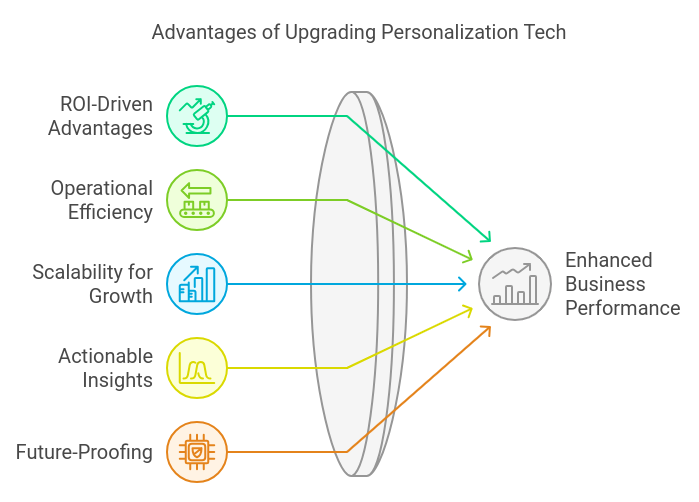
ROI-Driven Advantages
At the heart of any personalization strategy lies the promise of better customer engagement. By delivering tailored content that resonates with individual preferences, businesses foster deeper emotional connections. This results in higher engagement rates, increased time spent on platforms, and more meaningful customer interactions. An enhanced personalization framework also directly impacts Customer Lifetime Value. Personalized journeys make customers feel understood, encouraging repeat purchases and opening doors to upsell and cross-sell opportunities. For example, a SaaS platform offering customized feature recommendations based on usage behavior not only retains customers longer but also increases revenue per account.
Operational Efficiency
Advanced personalization tools often come equipped with automation capabilities that reduce reliance on manual interventions. Tasks like segment creation, email customization, and campaign optimization are handled by algorithms, enabling teams to focus on strategic initiatives rather than routine activities. This streamlined approach improves productivity while reducing the likelihood of human error.
Scalability for Growth
As businesses scale, managing increasing volumes of traffic and customer data becomes a daunting challenge. Upgraded personalization tools are designed with scalability in mind, allowing businesses to handle exponential growth without compromising performance. For example, an eCommerce platform experiencing seasonal surges in traffic can use adaptive personalization algorithms to maintain seamless user experiences for millions of visitors simultaneously.
Actionable Insights
Modern personalization technologies harness the power of AI and machine learning to generate actionable insights. These tools analyze vast amounts of customer data to predict trends, identify emerging behaviors, and recommend the best course of action. For instance, a financial services company might use predictive analytics to anticipate when customers are most likely to renew subscriptions or request new products, enabling proactive engagement.
Future-Proofing
In an era of tightening regulations and evolving customer expectations, investing in personalization technology ensures businesses remain agile. Advanced tools help organizations adapt to regulatory requirements like GDPR and CCPA by improving data transparency and consent management. Furthermore, these technologies are built to evolve alongside market demands, ensuring that businesses stay ahead of the curve in delivering customer-centric experiences.
A Strategic Cost-Benefit Framework
Evaluating whether to invest in new personalization technology requires a structured approach that balances costs with benefits, blending financial analysis with broader strategic considerations. Here's how businesses can methodically assess their decision:
Audit Current Capabilities
The first step is to assess existing personalization tools and workflows. Are there gaps in functionality or areas where inefficiencies hinder outcomes? For example, outdated systems might struggle to deliver real-time recommendations or lack integration with other marketing platforms. Alongside this, benchmark current performance metrics like churn rate, conversion rate, and average order value to understand where personalization enhancements could make the greatest impact.
Quantify Benefits with Data
A data-driven approach to quantifying benefits brings clarity to decision-making. Consider hypothetical scenarios: if improved personalization increases conversion rates by 10%, what would that mean for annual revenue? For instance, an online retailer with $5 million in annual sales could realize an additional $500,000 in revenue. Use these projections to demonstrate potential ROI to stakeholders.
TCO vs ROI
Total Cost of Ownership (TCO) should be evaluated against the projected return on investment (ROI). TCO includes direct expenses like licensing, training, and system maintenance, but also hidden costs such as integration challenges or temporary inefficiencies during the transition. Stack this against potential ROI over time. For instance, a company might spend $100,000 on implementation but recover that within 12 months through increased sales and reduced operational costs.
Scenario Modeling
Develop multiple scenarios to account for uncertainties:
Best-Case Scenario: The technology integrates seamlessly, boosts conversions by 20%, and pays for itself within a year.
Worst-case scenario: Challenges with implementation lead to downtime, and returns fall short of expectations.
Realistic Scenario: Moderate adoption hurdles occur, but steady growth delivers long-term ROI within two to three years.This exercise helps anticipate risks and prepares the business for contingencies.
Non-Monetary Benefits
While financial returns often drive decisions, non-monetary benefits can be equally compelling. Enhanced personalization improves brand reputation, signaling innovation and customer-centricity. Employees gain access to intuitive tools that streamline workflows, leading to higher satisfaction and reduced burnout. Customers experience more tailored interactions, fostering trust and loyalty. These intangible gains, though harder to quantify, significantly contribute to the long-term value of personalization investments.
Red Flags to Watch Before Committing
Investing in personalization technology can transform a business, but potential pitfalls can turn an opportunity into a liability. Here are key red flags to avoid before committing:
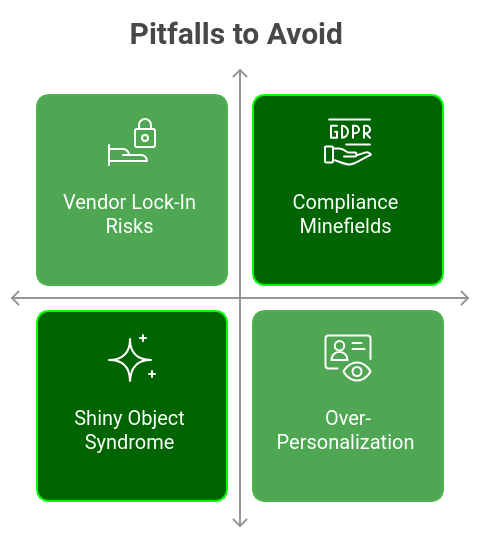
Shiny Object Syndrome
The allure of the latest, buzzword-laden technology can be hard to resist. Vendors often emphasize features like "hyper-personalization" or "next-gen AI," but not all solutions deliver measurable outcomes. Businesses must evaluate whether the technology addresses specific pain points or merely adds complexity. For example, if a platform boasts predictive analytics but your team lacks the data maturity to utilize it effectively, it may become a costly, underutilized asset.
Vendor Lock-In Risks
Relying heavily on a single vendor can restrict your ability to scale or adapt as needs evolve. Some personalization platforms use proprietary integrations or data formats, making it challenging to switch providers later. Ensure that the technology offers open APIs, data portability, and seamless integration with your existing marketing stack to maintain flexibility.
Over-Personalization Pitfalls
Striking the balance between personalized and invasive is critical. Overly granular personalization—such as referencing personal preferences too frequently or using data in ways customers didn’t consent to—can lead to discomfort or distrust. For instance, an eCommerce brand that repeatedly mentions abandoned cart items across platforms might appear intrusive rather than helpful. Testing personalization limits and regularly reviewing customer feedback can mitigate this risk.
Compliance Minefields
With data privacy laws like GDPR and CCPA continuously evolving, ensuring compliance is non-negotiable. Vendors must provide robust tools for managing user consent, anonymizing data, and maintaining audit trails. If the platform’s compliance features are vague or insufficient, your business could face hefty fines or reputational damage. Always vet the vendor’s track record in adhering to regulations before signing a contract.
By recognizing these red flags, businesses can make informed decisions, ensuring that the technology not only meets their current needs but also adapts to future challenges.
Conclusion
Embrace Change, But Strategically----The potential of personalization technology is undeniable—but success lies in a deliberate, informed approach. Balancing costs against measurable benefits, aligning capabilities with business goals, and avoiding common pitfalls ensures investments are sustainable and impactful.
Before committing, conduct a thorough audit of your existing capabilities, prioritize long-term scalability, and demand transparency from vendors. When personalization technology delivers value across engagement, efficiency, and compliance, it evolves from an expense into a strategic advantage.


