Introduction
In today’s rapidly evolving educational landscape, adaptive learning paths have emerged as a transformative approach to personalized education. These customized educational journeys are tailored to an individual learner's needs, pace, and understanding. Powered by data and technology, these paths dynamically adjust content, difficulty levels, and instructional strategies to suit each learner’s unique profile. Unlike traditional one-size-fits-all approaches, adaptive learning provides a scalable yet deeply personalized way of delivering knowledge.
The need for educational platforms to embrace adaptive methodologies has never been more critical. Learners today are diverse—not just in demographics but also in their skills, prior knowledge, and learning styles. A static curriculum often fails to address these differences, leaving some learners disengaged while others are overwhelmed. Adaptive learning paths enable platforms to bridge this gap, fostering inclusivity, enhancing learner satisfaction, and improving outcomes.
This blog explores the essence of adaptive learning paths and their growing relevance in modern education. You’ll discover why this approach is considered the future of education, its impact on learners and educational platforms, and actionable steps for creating adaptive learning experiences. By the end, you’ll understand how adaptive learning paths can elevate educational platforms to new heights.
Why Adaptive Learning Paths Are the Future of Education
The educational paradigm is shifting. Traditionally, learning experiences were designed as static, linear processes where every learner progressed at the same pace, regardless of their individual needs or abilities. While this approach served the masses during its time, it’s increasingly inadequate in addressing the demands of today’s diverse and digitally native learner base. Adaptive learning paths represent a fundamental change—offering dynamic, data-driven experiences that prioritize the learner’s journey over the rigidity of pre-set curriculum.
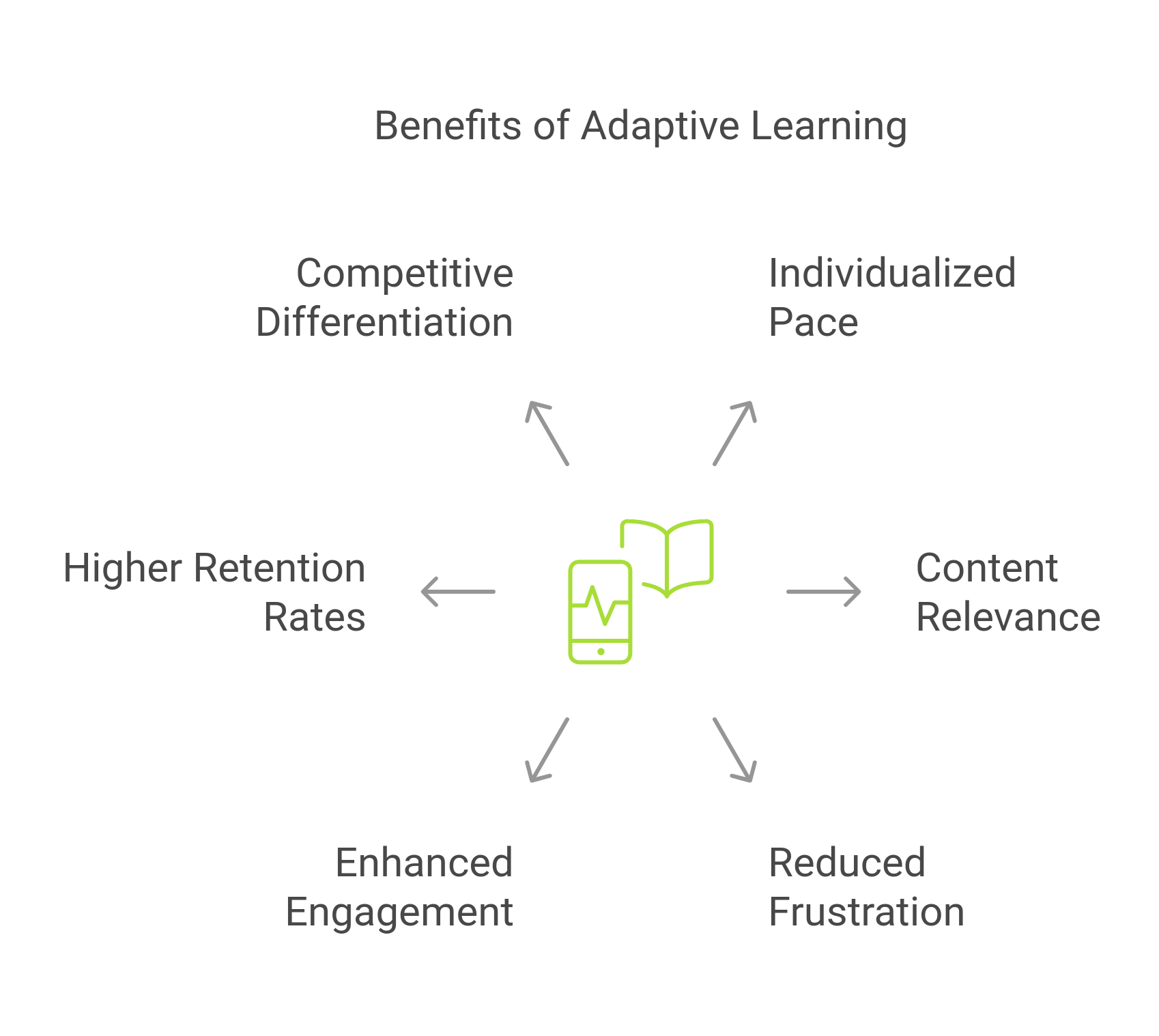
Benefits for Learners
- Individualized Pace: Not all learners grasp concepts at the same speed. Adaptive learning paths allow individuals to progress at a pace that suits their capabilities. Quick learners can move ahead without waiting for peers, while others can revisit challenging concepts as needed. This ensures mastery of the material without the pressure of keeping up with a fixed schedule.
- Content Relevance: Adaptive systems analyze a learner’s preferences, goals, and performance data to deliver content that aligns with their interests and needs. This minimizes irrelevant distractions, making the learning process more engaging and efficient. For instance, a history student struggling with medieval timelines might receive additional context and resources while skipping over sections they already understand.
- Reduced Frustration: Learners often abandon courses when they feel overwhelmed or disengaged. Adaptive learning paths mitigate this by adjusting the difficulty level in real-time. If a learner is struggling with advanced concepts, the system can redirect them to foundational content, building their confidence and knowledge base before reintroducing more complex topics.
Benefits of Educational Platforms
- Enhanced Engagement: Adaptive learning paths create a more interactive and engaging user experience. By catering to their specific needs, platforms can maintain learners’ interest, reduce dropout rates, and increase course completion rates.
- Higher Retention Rates: Personalized learning experiences often lead to better knowledge retention. When learners are actively engaged and not overwhelmed, they absorb information more effectively, directly impacting their satisfaction and loyalty to the platform.
- Competitive Differentiation: In a crowded marketplace of educational tools, offering adaptive learning paths gives platforms a significant edge. It positions them as forward-thinking, learner-centric providers capable of meeting the expectations of modern education. By leveraging adaptive technologies, platforms can attract more users and establish a strong reputation for innovation.
Adaptive learning is not just a trend; it’s a response to the changing needs of education. As technology evolves, these paths promise a future where learning is as unique as the individuals it serves.
The Pillars of Adaptive Learning Path Creation
Creating adaptive learning paths requires a solid foundation built on three interconnected pillars: data, technology, and content design. Each plays a critical role in delivering a seamless and personalized learning experience.
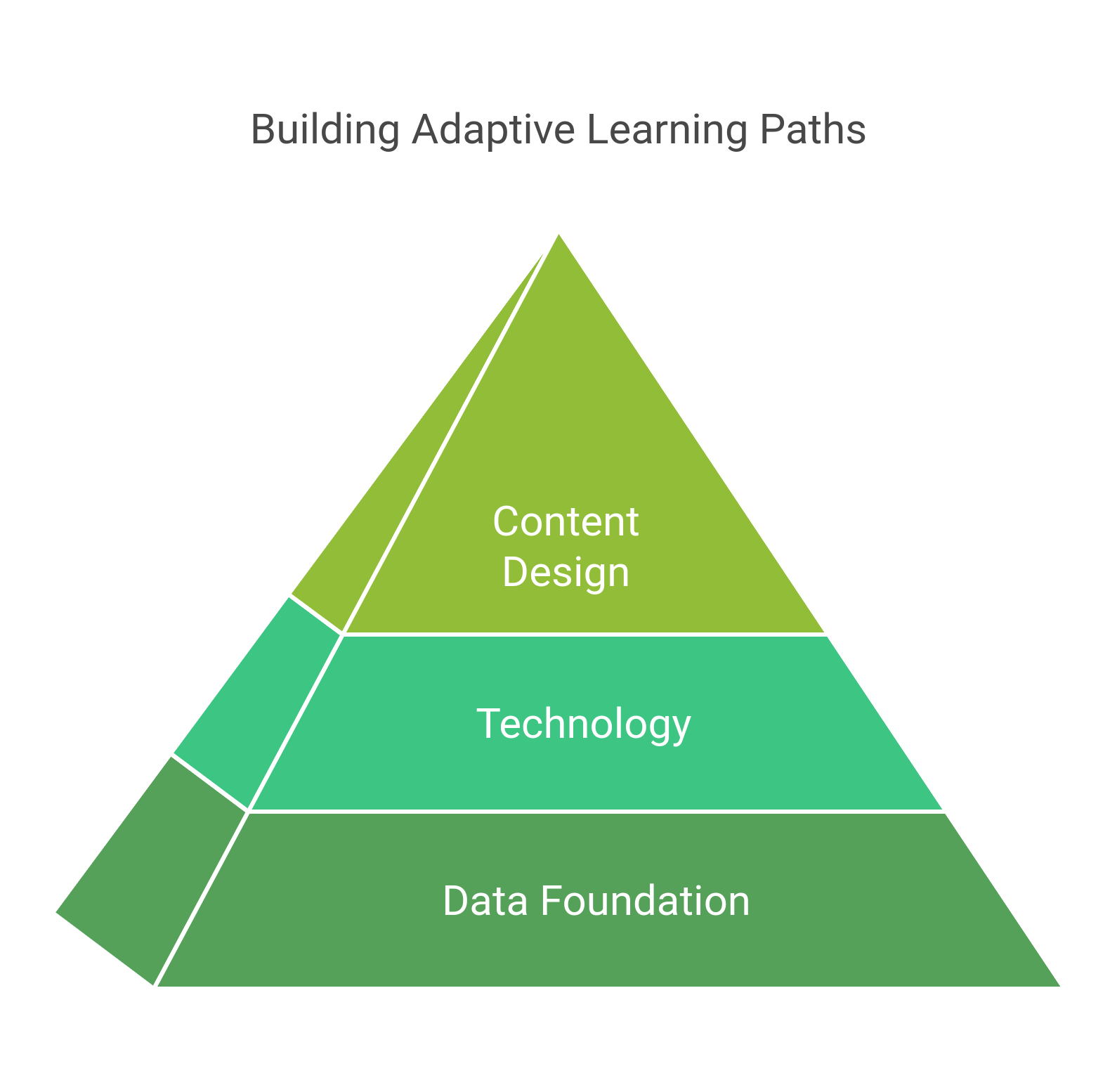
Data: The Foundation of Personalization
Data is the cornerstone of adaptive learning paths. Platforms must collect, analyze, and leverage data to understand each learner's profile, including their goals, strengths, weaknesses, and preferences. For instance, pre-assessment tests can reveal a learner’s prior knowledge while tracking real-time interactions—such as quiz performance or time spent on specific modules—and offer insights into their engagement levels and learning pace. This data forms the basis for crafting highly tailored educational experiences.
Technology: AI and Machine Learning as the Engines of Adaptation
Advanced technologies like artificial intelligence (AI) and machine learning (ML) power the adaptability of these learning paths. AI algorithms analyze vast datasets in real-time to predict learners' needs and recommend the most relevant content. For example, if a learner struggles with algebraic concepts, ML models can automatically suggest simpler exercises, videos, or tutorials to reinforce foundational knowledge before progressing to advanced topics.
Content Design: Modular, Dynamic, and Engaging Materials
Content is the bridge between data insights and adaptive delivery. Adaptive learning requires modular content that can be easily rearranged or swapped based on individual needs. Dynamic materials, such as interactive simulations, quizzes, and case studies, keep learners engaged while ensuring flexibility in content delivery. For example, a module on marketing fundamentals can include video lectures, interactive infographics, and real-world case studies, enabling learners to choose the format that resonates with them.
How to Create Adaptive Learning Paths
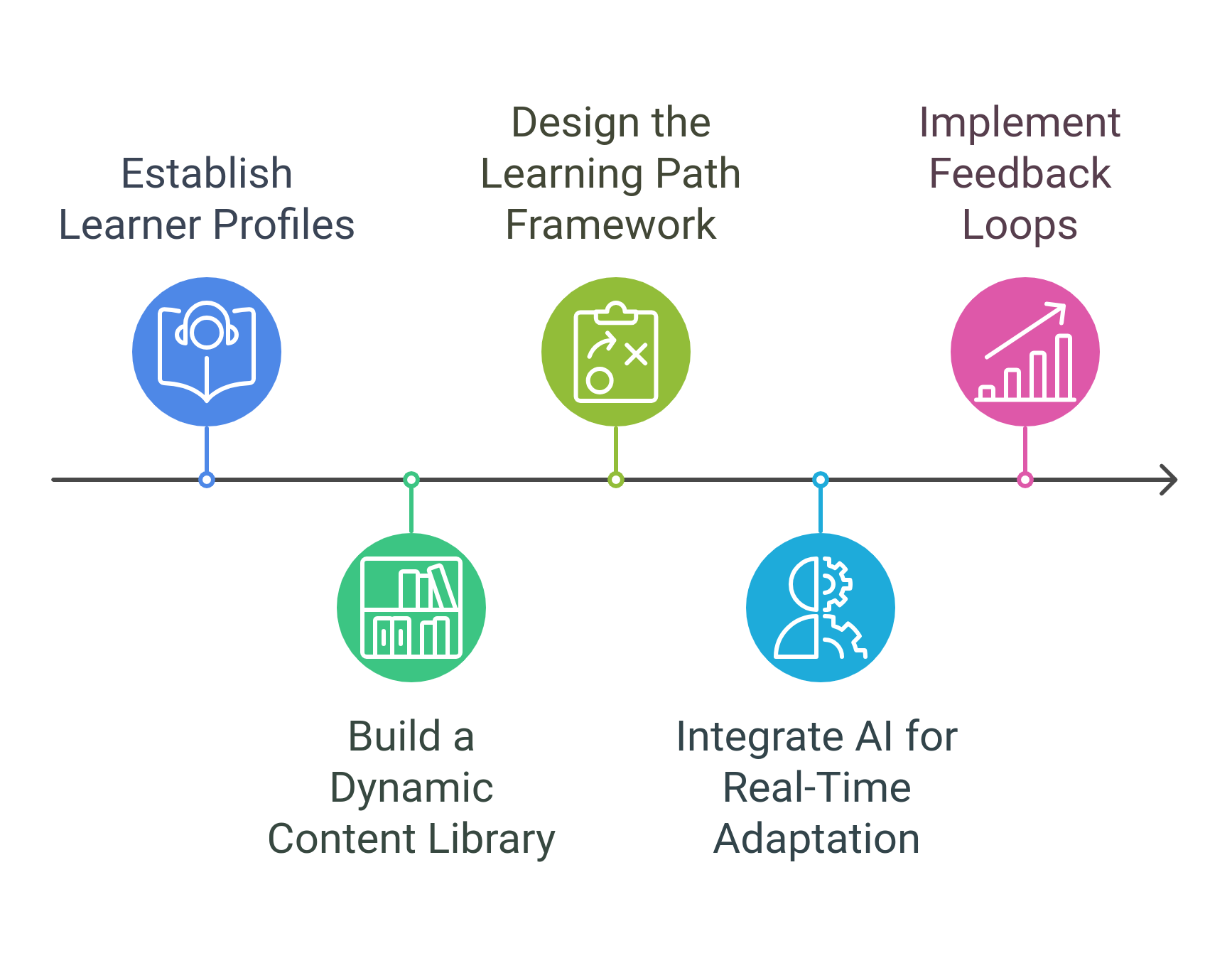
Step 1: Establish Learner Profiles
Understanding the learner is the first step in creating an adaptive learning path. This involves collecting data through:
- Pre-assessments: Evaluate existing knowledge and skills. For example, a math platform might administer a diagnostic test to determine whether a student is ready for algebra or needs reinforcement in arithmetic.
- Preferences: Allow learners to specify their preferred learning styles, such as visual or kinesthetic. A language learning app, for instance, could let users select between flashcards, video tutorials, or speaking exercises.
- Real-time interactions: Track behavioral patterns, like which modules are revisited frequently or skipped. If a user repeatedly pauses a video tutorial, the system might recommend shorter, bite-sized content instead.
Step 2: Build a Dynamic Content Library
A robust content library is essential for adaptive learning. Focus on the following:
- Modularity: Break content into small, manageable units tagged with metadata (e.g., difficulty level, topic, format). For example, a history course could include a timeline of events, each as a standalone module, tagged with labels like “Beginner” or “Advanced.”
- Diversity: Offer content in multiple formats to cater to varied preferences. For example, a biology platform might include 3D models, video experiments, interactive quizzes, and written guides for a topic like cell structure.
- Scalability: Design the library so adding new modules as content evolves is easy. For instance, an online programming course can continuously update its Python section to reflect the latest libraries and frameworks.
Step 3: Design the Learning Path Framework
The learning path must dynamically adapt based on real-time inputs:
- Performance: If learners excel in quizzes, the system can accelerate their pace by unlocking advanced content. For instance, scoring well in vocabulary quizzes in a language app might trigger access to complex grammar modules.
- Preferences: Offer alternate formats for the same content. For example, a student struggling with a written physics explanation might be presented with an animated video instead.
- Goals: Tailor the path to evolving objectives. For instance, an engineering course might adjust its difficulty levels if a learner focuses on robotics instead of general mechanical engineering.
Step 4: Integrate AI for Real-Time Adaptation
AI algorithms play a central role in continuously personalizing the learning journey:
- Recommendations: Suggest next steps based on a learner’s progress. For example, a coding platform might recommend a project-based assignment once a learner completes foundational lessons.
- Dynamic Assessments: Create adaptive quizzes that adjust in difficulty. For instance, if a learner answers a series of easy math questions correctly, the system can introduce more challenging problems.
- Remediation: Identify learners who are struggling and suggest targeted support. For example, if a student frequently answers incorrectly on a chemistry topic, the system can recommend a foundational module on that concept or assign a one-on-one tutoring session.
Step 5: Implement Feedback Loops
Continuous improvement relies on gathering and acting on feedback:
- Learner Feedback: Allow users to rate content relevance and difficulty. For example, if many students mark a module as too complex, the platform can simplify its delivery or provide additional resources.
- Analytics: Use performance data to refine pathways. For instance, if analytics show learners frequently abandon a particular module, it might indicate a need for reformatting or content redesign.
Technology Stack for Adaptive Learning Paths
An effective technology stack is essential to build a seamless adaptive learning experience. This stack integrates various tools and platforms that enable personalization, real-time adaptation, and smooth learner interaction. The right combination of technologies ensures that the learner journey remains fluid and engaging. Followin are the key tools:
Learning Management Systems with Personalization Features
An LMS is the backbone of any online learning platform. When equipped with personalization features, it can track learner data, such as progress, preferences, and performance, to adjust the learning path. Modern LMS platforms often have built-in features for learner segmentation, content delivery, and assessment management. For instance, platforms like Moodle or Canvas enable the integration of adaptive learning tools that personalize content based on learner needs.
AI-based Recommendation Engines
Artificial Intelligence (AI) powers the heart of adaptive learning by recommending personalized content. These engines analyze learner data (such as quiz performance, behavior, and preferences) to suggest tailored learning materials. For example, AI algorithms might suggest a deeper dive into a topic if a learner repeatedly interacts with related content, or they might recommend simpler content if a learner struggles with a particular concept. This real-time decision-making ensures that every learner is supported according to their unique learning curve.
Real-time Analytics Dashboards
Analytics dashboards allow educators and administrators to monitor learner progress in real-time, offering insights into how learners interact with content. This data is crucial for adapting the learning paths and making data-driven decisions. Dashboards typically display completion rates, engagement levels, and assessment performance metrics. By leveraging these insights, instructors can intervene when necessary, offering additional resources or adjusting the course structure. For instance, if a learner is consistently underperforming on specific quizzes, it could indicate a gap in their understanding, prompting the system to provide remediation or additional content.
Integration Essentials
- APIs to Unify Data Sources for Seamless User Experiences: Adaptive learning requires multiple data sources to work together seamlessly. APIs (Application Programming Interfaces) play a key role in unifying these data streams, such as learner progress, content libraries, and external systems. Integrating your LMS with tools like CRM platforms, student information systems (SIS), or content management systems (CMS) through APIs ensures that all data points are connected. This unified approach allows for real-time adaptations based on learner interactions, providing a smoother and more responsive experience. For example, if learners change their course preference in the CRM, an integrated API ensures the LMS adapts the content accordingly.
Best Practices for Effective Adaptive Learning Paths
Creating adaptive learning paths requires careful planning and ongoing optimization. By adhering to best practices, educators and platform developers can ensure that adaptive learning is both effective and equitable for all learners.
Balance Automation with Human Oversight
While automation plays a crucial role in adaptive learning, human oversight is necessary to maintain empathy, relevance, and engagement. AI algorithms can personalize content based on data, but they may not always capture the nuanced needs of individual learners, such as emotional or motivational challenges. Regular interaction with instructors or mentors is essential to address these emotional and contextual elements. For example, if an algorithm detects that a learner is progressing too quickly through content, an educator could intervene to provide additional support, ensuring the learner doesn't feel overwhelmed or disengaged. Human oversight also helps identify if the system has made inappropriate recommendations or if the learner’s needs are not being adequately met.
Ensure Equitable Access by Aligning Adaptive Paths with Diverse Learner Needs
Adaptive learning paths should be designed to cater to a wide range of learners, ensuring equitable access to education. The technology should account for differences in background, abilities, learning styles, and goals. This involves making the learning paths flexible and inclusive, providing alternative content formats, and adjusting pacing to accommodate learners with different learning preferences. For example, a platform might offer subtitles for videos, text-to-speech options for the visually impaired, or simpler explanations for learners with lower skill levels. Additionally, the adaptive system should be regularly assessed to ensure it doesn't inadvertently favor certain types of learners over others, maintaining fairness and accessibility across the board.
Regularly Audit Learning Paths to Ensure They Remain Relevant and Effective
An adaptive learning path is not a one-time creation; it requires ongoing evaluation and refinement. Regular audits of the content, performance data, and learner feedback ensure that the system continues to meet the evolving needs of learners. As new content, tools, or pedagogical approaches emerge, learning paths must be adjusted to incorporate these updates. Additionally, learner behavior and performance patterns may change over time, and adaptive systems should evolve in response to these shifts. For example, if a specific learning module consistently underperforms, it should be revisited to identify gaps in content or structure, allowing for improvements that enhance its effectiveness. Similarly, new advancements in AI or analytics tools can be integrated to further optimize the personalization process.
Measuring the Impact of Adaptive Learning Paths
To evaluate the success of adaptive learning paths, it’s essential to track key performance indicators (KPIs) that reflect both learner outcomes and the effectiveness of the personalized learning experience. By carefully monitoring these KPIs, educators and platform developers can refine their adaptive strategies, ensuring that learning paths deliver the desired impact. Lets look at the important key performance indicators:
Engagement Rates
Tracking engagement rates helps determine how well learners interact with the adaptive content. High engagement typically indicates that the content is relevant and motivating. Metrics such as time spent on modules, click-through rates for recommendations, and frequency of interactions with adaptive features (like quizzes or feedback mechanisms) can all provide insight into engagement. For instance, if learners frequently revisit specific sections or use content in different formats (video, quiz, text), the personalized paths keep them engaged and invested in their learning journey.
Completion Rates
Completion rates measure how many learners finish their learning paths or specific modules. High completion rates suggest that the adaptive system correctly paces content and offers learners the right level of challenge. A sudden drop-off in completion could indicate that learners are finding the content too difficult or not engaging enough, prompting a review of the system’s adaptive algorithms. For example, if a module on advanced topics has a much lower completion rate than introductory ones, the system may need to adjust its pacing or offer more support at key points.
Knowledge Retention Scores
Knowledge retention is crucial for assessing the effectiveness of learning paths. Retention scores can be evaluated through post-assessments or quizzes taken at various intervals after content completion. Higher retention scores indicate that learners have internalized the content, not just passed through it. Adaptive learning paths should reinforce key concepts and provide spaced repetition, ensuring learners retain critical information over time. For instance, if learners consistently score well on quizzes designed to test long-term memory of core concepts, the adaptive learning path facilitates true learning rather than short-term recall.
Learner Satisfaction Surveys
Learner satisfaction directly indicates the overall effectiveness of the adaptive learning experience. Surveys that assess learners’ perceptions of content relevance, ease of navigation, and the perceived value of the personalized learning paths can provide actionable insights. For example, a survey might ask learners to rate their satisfaction with the pace of the course or how well the learning content matched their preferences. Positive feedback indicates that the adaptive system is meeting or exceeding expectations, while negative feedback can highlight areas needing adjustment.
Conclusion
Adaptive learning paths are more than just a technological innovation—they represent a paradigm shift in how we approach education. By personalizing learning experiences to cater to the unique needs of each learner, adaptive learning not only enhances engagement and knowledge retention but also empowers educators to provide more targeted, effective support. As educational platforms embrace this transformative approach, they must start by building scalable, data-driven frameworks that can grow and evolve with their learners. Adaptive learning's beauty lies in its ability to continuously improve based on real-time learner data, ensuring that the educational experience is always optimized for success.
If you are an educator, platform developer, or decision-maker in education, now is the time to explore or implement adaptive learning solutions that align with your unique platform needs. By leveraging data, AI, and learner insights, you can create personalized learning journeys that empower your learners to reach their full potential. Whether you're looking to integrate adaptive learning into an existing platform or build from the ground up, the possibilities are endless. Start your journey today and transform the future of education, one personalized path at a time.