

Introduction
The way people shop has transformed dramatically—from static product pages to immersive shopping experiences powered by technology. In today’s digital economy, buyers expect more than transactions; they expect interaction, relevance, and emotion. They want to visualize, customize, and connect with a brand before they ever click “buy.”
That’s where augmented reality (AR) and personalization come together. Augmented reality—meaning the overlay of digital elements on the real world—allows shoppers to see, feel, and test products virtually. Pair that with personalized recommendations that adapt to their preferences, and the result is a shopping journey that feels intuitive and human.
Picture this: instead of scrolling through product photos, a shopper can virtually place furniture in their home, try on clothes in 3D, or preview paint colors on their walls—all experiences guided by AR. When those visuals are personalized to each customer’s taste and context, they stop being demos and become immersive, data-driven experiences that build confidence and loyalty.
The combination of AR personalization in shopping and intelligent data use marks a turning point in modern retail. It’s not just about showing products—it’s about creating an AR customer experience that bridges curiosity and conversion, transforming casual browsers into emotionally invested buyers.
Augmented Reality in Retail
Augmented reality (AR)—meaning the integration of digital visuals into the real world—has redefined how customers explore, evaluate, and purchase products. In retail, AR transforms traditional browsing into immersive shopping experiences where curiosity meets confidence.
Instead of imagining how a sofa might look in their living room, shoppers can visualize it in real time. Instead of guessing whether a jacket fits, they can try it virtually. This merging of the physical and digital experience doesn’t just entertain; it builds trust—a key component of AR personalization in shopping.
How AR Personalization Elevates the Customer Experience
The magic of AR isn’t in the technology alone—it’s in its ability to personalize. When powered by data, AR experiences can adapt in real time to customer preferences, behavior, and context. For instance, an app might recommend furniture based on a shopper’s room size or clothing colors that complement their skin tone.
This level of AR customer experience transforms generic virtual try-ons into tailored journeys that anticipate user needs. For marketers, it means bridging the gap between engagement and conversion through visual, context-aware storytelling.
Examples of Immersive AR in Action
- IKEA Place: Allows customers to visualize how furniture fits their home while providing personalized suggestions for complementary items.
- Sephora Virtual Artist: Uses AR personalization to recommend beauty products based on facial features and preferences.
- Nike Fit: Employs AR to measure foot dimensions, offering custom fit recommendations and reducing returns.
These aren’t just tech demos—they represent a new kind of AR-driven personalization that blends utility with delight. Every interaction becomes a learning moment for brands and a confidence boost for customers.
The Bigger Picture
Augmented reality isn’t replacing physical retail—it’s enhancing it through personalization. As AR becomes more data-intelligent, its role will evolve from being a product visualization tool to a real-time personalization engine that powers immersive shopping experiences across every channel.
The Role of Personalization in Augmented Reality
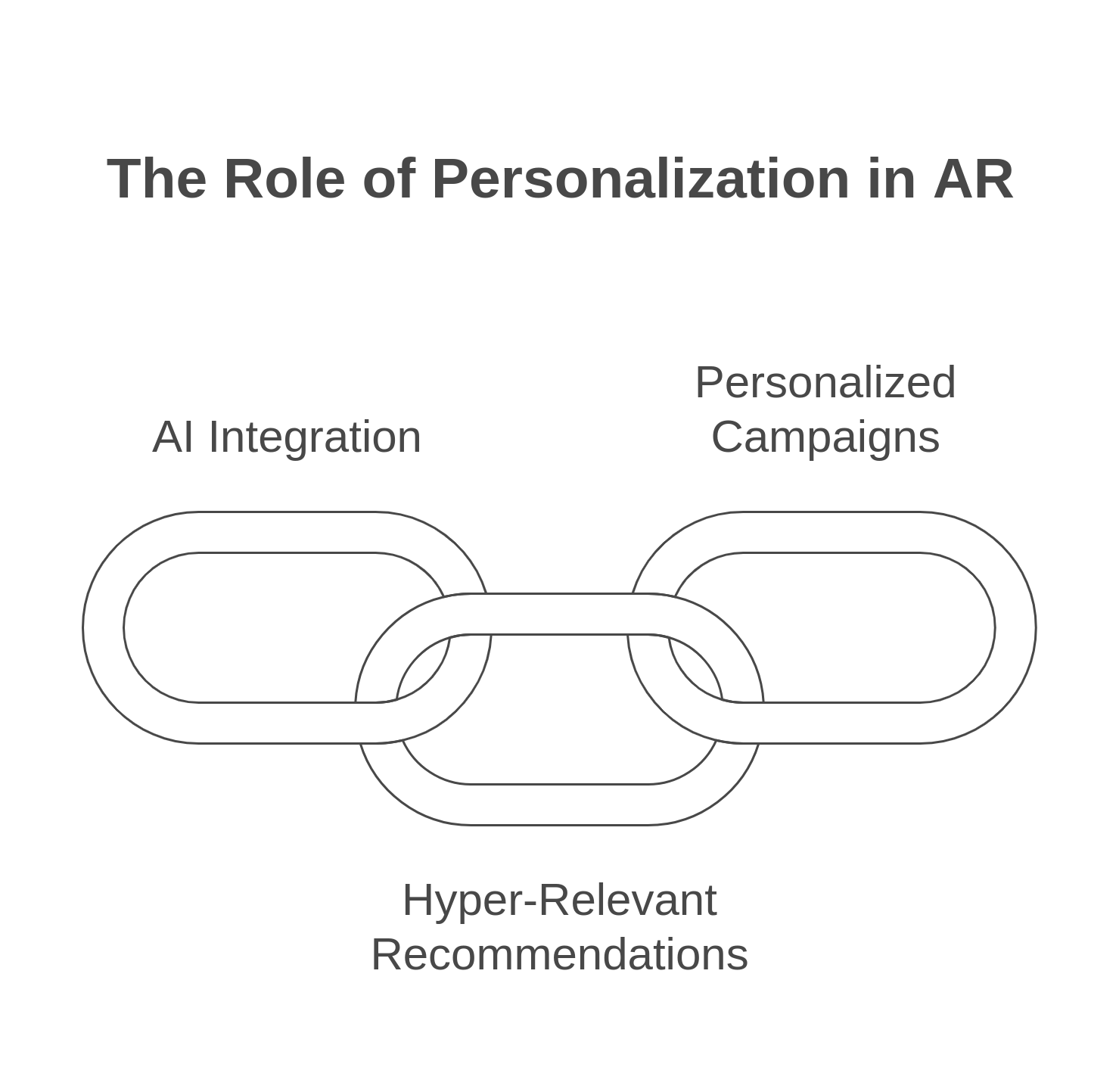
In today’s digital-first retail landscape, augmented reality (AR) is more than a novelty — it’s a gateway to deeper, more personalized connections between brands and customers. However, without personalization, AR risks becoming just another flashy tech feature. What transforms it into a true differentiator is AR personalization — tailoring immersive experiences to each shopper’s unique preferences, behavior, and intent.
Why AR Personalization in Shopping Matters
AR’s real power lies in its ability to make shopping personal. Imagine an app that not only lets you virtually try on shoes but also recommends pairs that match your past purchases, budget, and even your local weather. That’s AR personalization in shopping — it transforms static virtual try-ons into dynamic, context-aware experiences.
For brands, this means every interaction becomes an opportunity to deepen customer trust and drive conversion. Instead of a one-size-fits-all product demo, shoppers receive experiences that feel individually designed, enhancing both engagement and retention.
How AI and Customer Data Power Personalized AR Experiences
Behind every great AR customer experience is data — from browsing behavior and purchase history to location and visual preferences. AI-powered personalization engines process this data to anticipate what each shopper wants next.
- Behavior-based recommendations: Suggest complementary or similar products during AR sessions.
- Real-time adaptation: Modify visuals or product options dynamically as users interact.
- Context-aware content: Deliver AR experiences suited to geography, seasonality, or current trends.
This synergy between AI and AR enables brands to create not just immersive but intelligent experiences — ones that evolve with every click, glance, and gesture.
The Impact of Personalized AR on the Customer Journey
When personalization meets AR, it redefines customer relationships. Shoppers feel understood, not targeted. They perceive the experience as helpful, not intrusive. And for brands, this results in:
- Higher engagement rates from interactive visual journeys.
- Reduced returns due to better decision confidence.
- Increased loyalty as users associate the brand with tailored innovation.
Ultimately, AR personalization transforms what was once a transactional moment into an emotional one — an experience that stays with the shopper long after checkout.
Benefits of Combining AR and Personalization
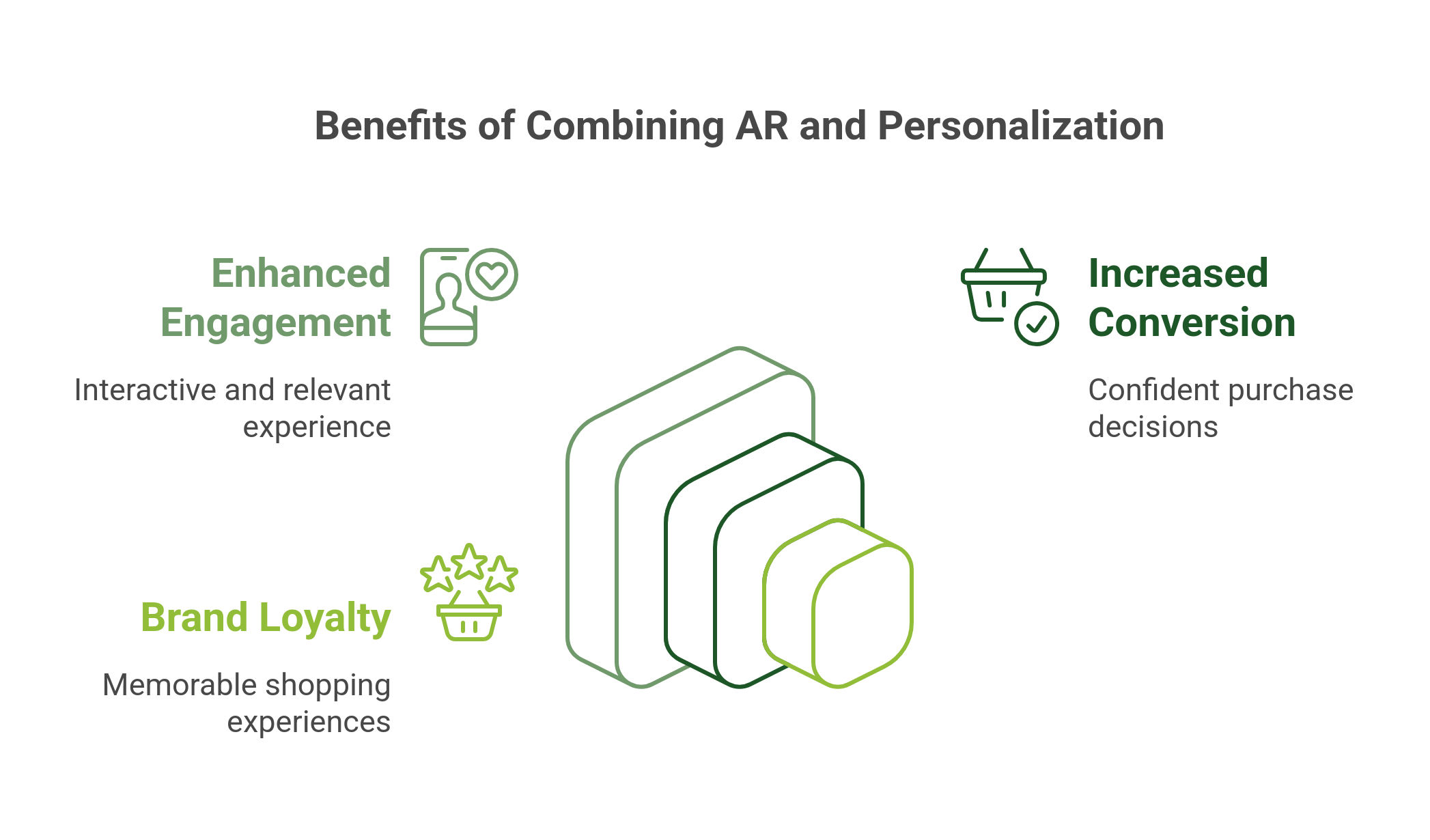
The fusion of augmented reality (AR) and personalization isn’t just a technological milestone—it’s a transformative force reshaping how brands connect with customers. Together, they create shopping experiences that feel interactive, relevant, and memorable. Here’s how this powerful combination delivers tangible benefits to both consumers and retailers:
Enhanced Customer Engagement
Shopping is no longer a passive act; with AR and personalization, it’s a dynamic experience that invites customers to interact with products in meaningful ways.
Immersive and Relevant Experiences: Personalization ensures that AR content resonates with the customer. Instead of generic virtual try-ons, shoppers see products tailored to their preferences, style, or even location. This relevance keeps them engaged longer and fosters a sense of connection with the brand.
Interactive Discovery: AR encourages exploration. For example, virtual try-ons let users experiment with different looks, and AI-powered personalization suggests products they may not have considered—creating a sense of surprise and delight.
Deeper Emotional Connection: By offering experiences that feel bespoke, brands can create a sense of exclusivity. Customers feel understood, not just sold to, which leads to a stronger emotional bond with the brand.
Boosting Conversion Rates
The decision to buy often hinges on confidence. AR and personalization work together to eliminate doubts, making the path to purchase smoother and more intuitive.
Confidence Through Visualization: AR enables customers to see how products will look or work in their lives, from a couch in their living room to a jacket on their body. Personalization takes this a step further by recommending the right size, color, or style, removing guesswork.
Reduction in Returns: By providing tailored recommendations, AR helps customers make informed decisions. When shoppers see exactly what they’re getting—and know it fits their needs—they’re less likely to return items.
Higher Basket Sizes: Personalized suggestions during AR experiences often lead to upselling and cross-selling. For instance, a user trying on a virtual pair of sunglasses might be shown a matching scarf or bag, increasing the likelihood of multiple purchases.
Building Brand Loyalty
In a crowded retail landscape, loyalty is earned by those who offer something exceptional—and AR-powered personalization is exactly that.
Memorable Shopping Journeys: Customers remember experiences that stand out. When a brand provides an AR experience tailored to their tastes, it’s no longer just shopping—it’s storytelling. This sense of uniqueness creates a lasting impression.
Fostering Trust Through Relevance: Personalization signals that a brand understands its customers. When recommendations align perfectly with needs or desires, it builds trust, a key driver of repeat purchases.
Encouraging Advocacy: Memorable experiences don’t just build loyalty—they inspire customers to share them. Shoppers are more likely to recommend a brand to friends or post about it on social media when they feel genuinely wowed.
The Synergy of AR and Personalization
Brands create a shopping experience that feels tailor-made for the individual by combining AR’s immersive capabilities with personalization’s relevance. This synergy not only satisfies modern consumer expectations but also gives retailers a competitive edge in an increasingly digital-first world. The result? Customers who feel engaged, confident, and deeply connected to the brand—transforming one-time buyers into lifelong advocates.
Challenges and Considerations for Retailers
The adoption of augmented reality (AR) and personalization promises remarkable value, but scaling these technologies comes with real-world hurdles. Retailers must balance innovation with practicality to deliver seamless, trustworthy, and inclusive AR customer experiences.
Technical Complexity
Implementing AR personalization in shopping requires significant investment in infrastructure, data pipelines, and device optimization. Many retailers underestimate the resources needed to deliver consistent, real-time performance across devices.
- Scalability: Personalization engines must process vast data sets quickly for dynamic AR rendering.
- Device Compatibility: AR experiences should perform equally well across smartphones, tablets, and AR wearables.
- Integration: AR systems need to sync smoothly with e-commerce platforms and customer data tools.
Tip: Start with pilot projects before enterprise-wide rollouts to ensure both performance and ROI scalability.
Privacy and Ethical Data Use
Behind every personalized AR experience lies a reliance on customer data—and that comes with responsibility. Maintaining privacy while enabling personalization is critical for trust.
- Compliance: Regulations like GDPR and CCPA require explicit consent and transparent data practices.
- Data Protection: Encrypt and anonymize user data to reduce exposure risk.
- Customer Transparency: Inform users how their data powers immersive shopping experiences, ensuring they see value in personalization.
Tip: Build privacy messaging into AR interfaces (“Your data helps us customize this view”) to strengthen transparency and confidence.
User Experience and Accessibility
Even the most advanced AR technology fails if customers can’t use it intuitively. A friction-free experience is the backbone of successful AR customer experiences.
- Ease of Use: Interfaces should feel natural, with clear prompts and minimal steps.
- Accessibility: Include options for voice navigation, captions, or simplified AR modes.
- Hardware Limitations: Ensure functionality even on mid-range devices to expand reach.
Tip: Conduct UX testing across diverse user groups to refine AR interactions and prevent drop-offs.
Turning Challenges into Opportunities
Retailers that confront these challenges head-on can turn barriers into a competitive advantage. Investing early in scalable tech, transparent data practices, and accessible design builds lasting trust—and positions brands as leaders in immersive, personalized shopping experiences.
Examples and Case Studies
AR and personalization have already begun to change the retail game, and some brands are leading the charge. These aren’t just gimmicks or novelties—they’re reshaping how customers experience shopping. Let’s take a closer look at a few brands that are getting it right:
IKEA’s Place App

IKEA took the concept of AR and made it essential for home shoppers. Their Place app lets customers virtually place furniture in their own space before making a purchase. Want to see if that couch looks good next to your fireplace? Simply point your phone’s camera, and voila—instant visual feedback.
What makes it stand out: By combining AR with personalized product suggestions, IKEA not only helps customers visualize their choices but also tailors recommendations based on their style preferences. Want a modern look? IKEA shows you contemporary pieces. It’s a perfect example of merging AR with personalization to make decision-making easy.
Amazon AR View
When you’re buying a new couch or a kitchen appliance online, one of the biggest frustrations is wondering if it will actually fit. Amazon’s AR View takes that anxiety away by letting you see how products look in your home. Whether it’s a sleek new coffee maker or a standing lamp, AR View lets you position the item exactly where you want to see it.
What makes it stand out: Amazon doesn’t just stop at showing the product in your space—they also push personalized suggestions based on your past purchases. So, while you’re visualizing your new coffee table, Amazon might nudge you with matching rugs, lamps, or wall art, making the shopping experience feel intuitive and tailored to your needs.
Gucci’s Virtual Sneakers
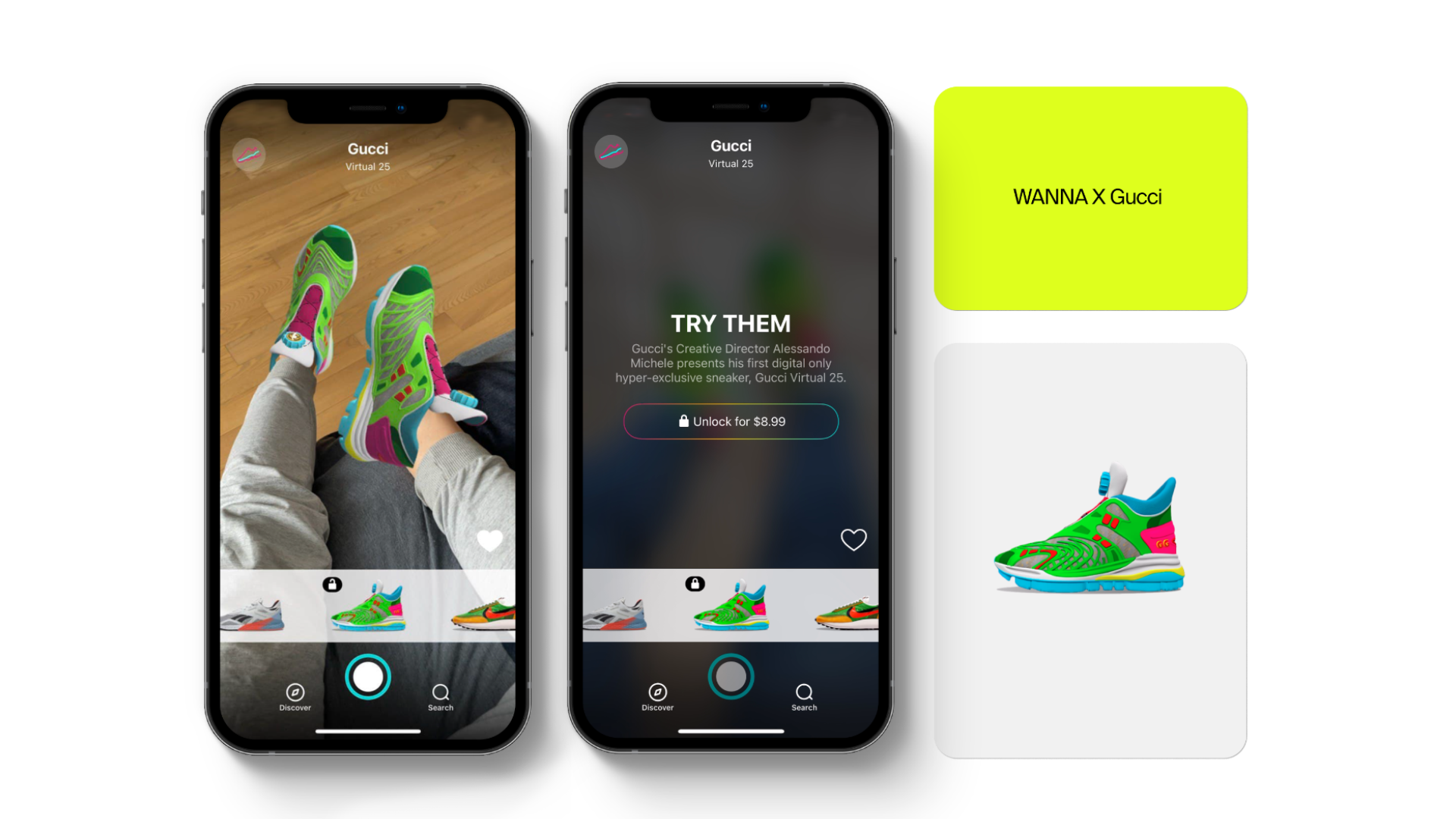
Gucci took a bold leap into AR with its virtual sneakers. Yes, virtual sneakers—no, you can’t wear them in real life. But you can “try them on” via an app and see how they look on your feet, paired with your own wardrobe. It’s the intersection of fashion, tech, and social media, where customers can snap pics of their virtual kicks and share them on social media for a global audience.
What makes it stand out: Gucci has turned AR into an experience that feels exclusive and aspirational. Not only do they use AR to let you try on virtual shoes, but they also use personalized recommendations to engage customers. It's a fun, interactive experience that helps the brand stand out in an age of hyper-visual digital marketing.
Warby Parker’s AR Glasses Try-On
Buying glasses online can feel like a gamble. Warby Parker’s AR feature solves this by letting customers virtually try on glasses using their smartphones. The best part? Warby Parker takes it a step further by using data like your face shape, eye color, and previous style choices to recommend frames that suit you best.
What makes it stand out: With a simple swipe of the app, customers can see how different styles look on their faces in real time. This personalized touch increases confidence and reduces the hesitation that often leads to cart abandonment in eyewear shopping.
Best Practices for Retailers Embracing AR and Personalization
As augmented reality (AR) and personalization become core to modern commerce, retailers need strategic discipline to turn innovation into consistent ROI. Here are four best practices that help brands deliver immersive, data-driven experiences that scale.
Start Small with High-Impact Use Cases
Begin with AR applications that deliver immediate value, such as product visualizations or virtual try-ons.
Identify categories with a high potential for customer engagement and focus efforts there. For example, furniture, cosmetics, and apparel are ideal for AR-driven personalization.
Pilot AR experiences in select markets or with specific customer segments to gather feedback and refine the offering before scaling.
Leverage Customer Data Ethically
Collect only the data necessary to enhance the AR experience, such as browsing behavior, purchase history, or preferences.
Be transparent about how customer data is used, and ensure compliance with privacy regulations like GDPR and CCPA.
Use AI and machine learning to analyze customer data and provide hyper-relevant AR recommendations. For instance, suggest complementary products during a virtual try-on session.
Regularly update personalization algorithms to reflect evolving customer preferences and behavior patterns.
Collaborate with AR Platforms
Partner with established AR technology providers to access advanced features and ongoing innovation. Examples include ARKit (Apple) and Spark AR (Meta).
Explore custom AR solutions that integrate seamlessly with existing e-commerce platforms and customer databases.
Stay updated on AR trends, such as AR wearables or holographic displays, to anticipate future customer needs and maintain a competitive edge.
Work with platforms offering scalable solutions to ensure that AR experiences remain consistent across geographies and devices.
Final Thoughts
The rise of augmented reality (AR) and personalization marks a new era of immersive shopping experiences—where customers no longer browse; they participate. AR bridges imagination and reality, while personalization ensures every interaction feels individually designed. For retailers and marketers, the opportunity lies in using AR personalization not as a novelty but as a strategic driver of trust, relevance, and conversion. When data, design, and AI work together, they create a seamless loop—one where each interaction refines the next.
The future of retail belongs to brands that merge technology with empathy. By building transparent, personalized, and visually engaging AR customer experiences, businesses can turn every virtual interaction into a moment of connection—and every connection into lasting loyalty.


