Why CRM is the Heartbeat of Modern Personalization
Does your marketing campaign need a stronger spark? Perhaps you’ve done all the right things by investing in audience research, running big campaigns, and producing high-quality content, but the needle still isn’t moving on conversions. If that sounds familiar you’re not alone.
It’s not in the volume of data you have — it’s in how well you use it.” Businesses that collect mountains of customer information tend to be flummoxed about what they can do with it that is meaningful. That’s where CRM systems come into play. They don’t just catalog data; they catalyze it, guiding you to build personalized experiences and hash out segmentation strategies that hit the bull’s eye. Think about it— if you could predict what a customer wants even before they realize it (or need it)? With a CRM system meant for personalization, you can. Let’s get down to why a CRM is not just another piece of software in your tech stack, but in fact the powerhouse behind better Customer Profiles, personalized interactions, and subsequently boosted conversions.
The Role of CRM Systems in Personalization and Conversion Optimization
If you’ve ever wondered why some brands seem to know exactly what you want—and others miss the mark—look no further than their CRM strategy. A CRM system is the difference between guessing what customers might like and delivering precisely what they need. Let’s break down how CRMs fuel personalization and conversion optimization, step by step.
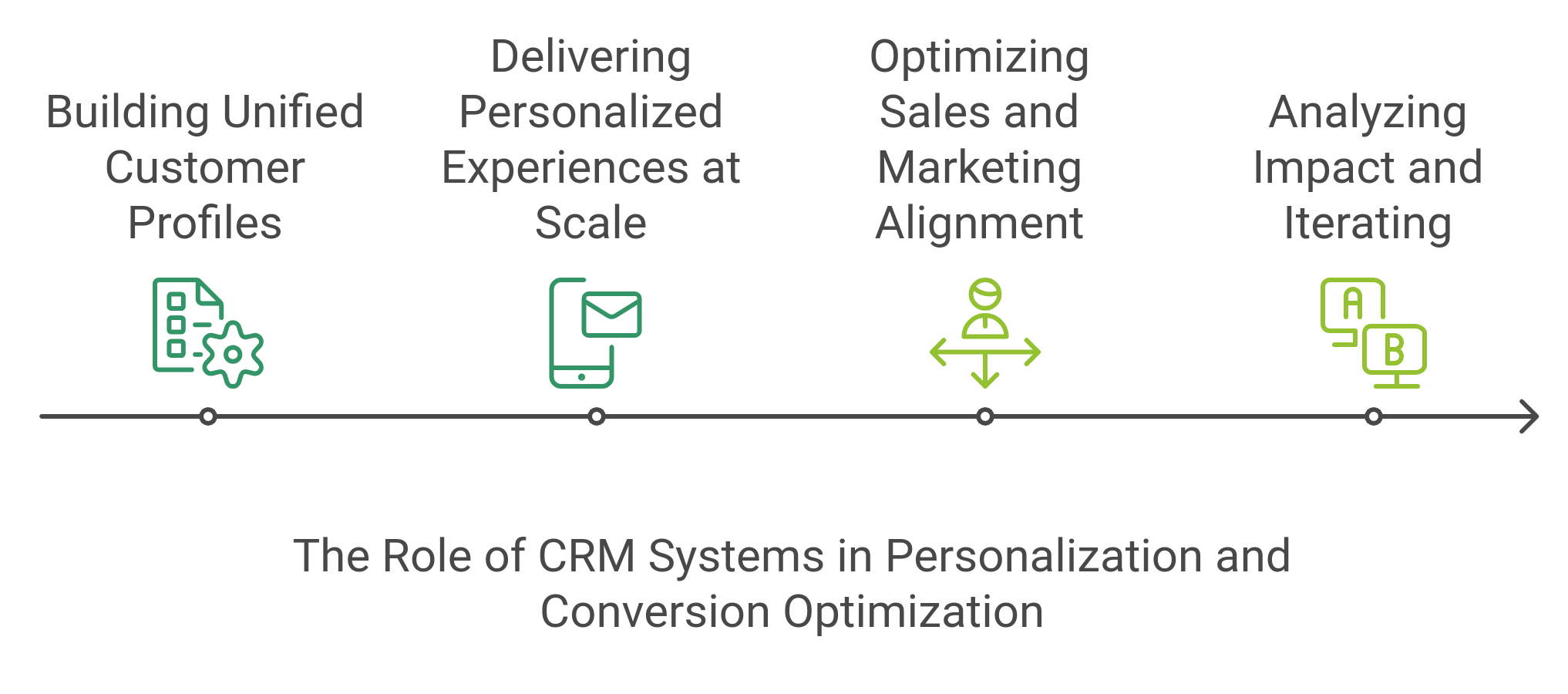
Building Unified Customer Profiles
Personalization starts with knowing your audience, and CRMs excel at gathering every piece of the puzzle. Imagine centralizing data from email campaigns, website behavior, social media interactions, and even in-store purchases. The result? A unified Customer Profile that reveals what your audience values most.
For example, a SaaS might notice a customer frequently browses their marketing hub services online but hasn’t made a purchase. Armed with this insight, the CRM can trigger a personalized email offering a discount on that particular service. By turning fragmented data into actionable insights, CRMs help businesses engage customers at the right time, with the right message—paving the way for higher conversions.
Why it matters: Without a centralized view, personalization is fragmented and often misses the mark. A CRM ensures every interaction feels intentional, boosting trust and engagement.
Delivering Personalized Experiences at Scale
True personalization isn’t just about a single interaction; it’s about delivering relevance across an entire customer journey, even when managing massive audiences. CRMs enable businesses to automate tailored content, offers, and communication based on customer segments.
For instance, a subscription service can use CRM data to send renewal reminders personalized to a customer’s past usage patterns. Heavy users might receive an offer for an upgraded plan, while infrequent users could get incentives to stay subscribed. These small, thoughtful adjustments make the customer feel seen, increasing retention and sales.Why it matters: Scaling personalized experiences with precision turns potential customers into loyal advocates, transforming engagement into conversions.
Optimizing Sales and Marketing Alignment
Here’s a common scenario: Marketing spends months designing a campaign, only for sales teams to misinterpret its messaging. CRMs eliminate these disconnects by providing shared access to real-time customer insights.
For example, a SaaS company using CRM data can ensure marketing focuses on creating content for a specific segment—say, small businesses looking for budget-friendly tools. Meanwhile, the sales team can reference the same data to personalize their outreach, highlighting features that solve cost challenges. The result? Consistency in messaging that resonates across the board.
Why it matters: When sales and marketing speak the same language, customers get a seamless, personalized experience, leading to smoother conversions and less friction.
Analyzing Impact and Iterating
The job isn’t done once you’ve launched a campaign or closed a deal. A CRM’s analytics capabilities provide critical insights into how personalization efforts are performing. From open rates on tailored emails to the sales generated from segmented offers, CRMs let you measure impact with precision.
For example, an e-commerce brand might discover that customers respond more to product recommendations based on browsing history than generic discount emails. With this insight, they can double down on personalized suggestions, continuously refining their strategies.Why it matters: Personalization is a moving target. By using CRM data to analyze and adjust, businesses ensure their strategies evolve alongside customer expectations, driving better outcomes over time.
Personalization Starts Here: How CRM Systems Transform Data into Insights
Personalization doesn’t happen in a vacuum—it starts with understanding your customers deeply and turning data into actionable insights. Here’s how CRM systems make that transformation possible:
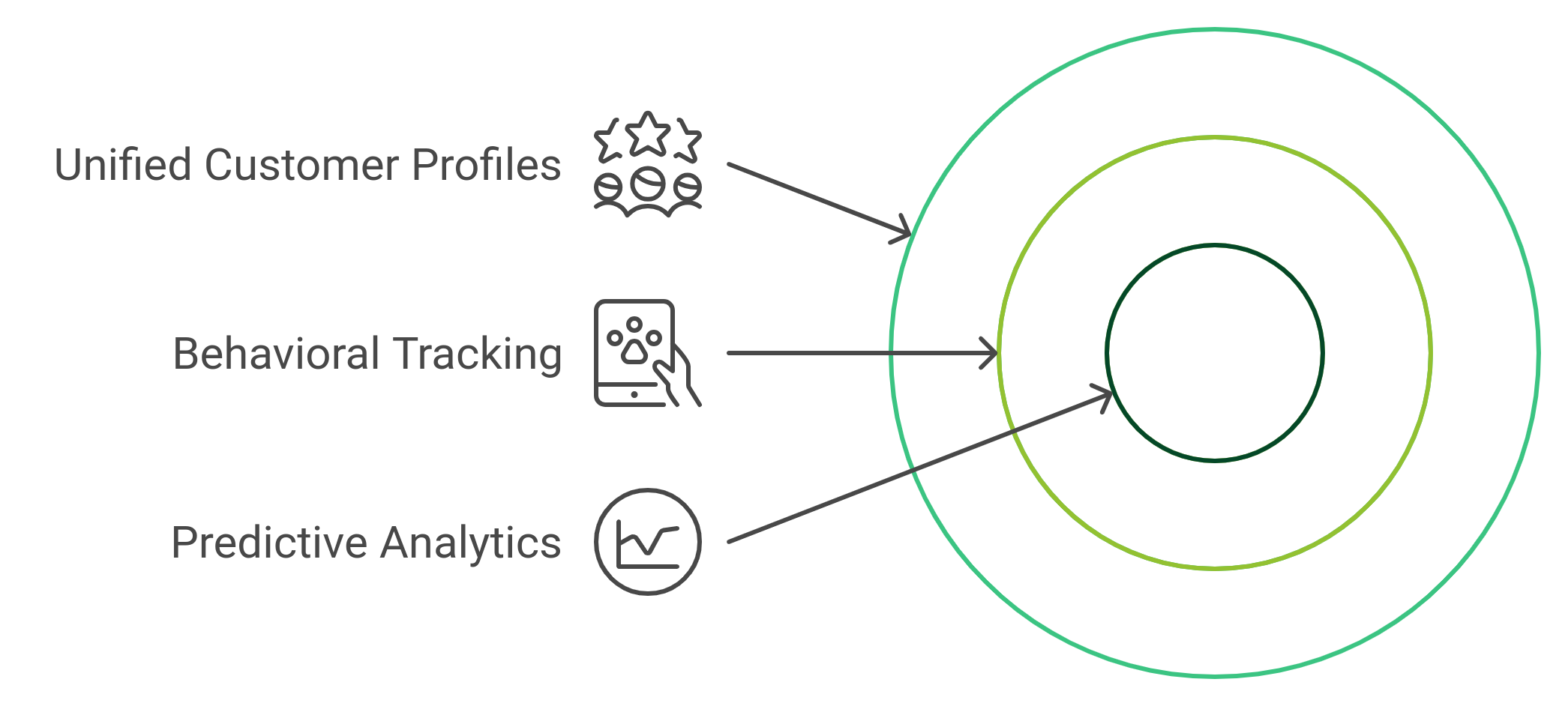
Unified Customer Profiles
A major hurdle for personalization is fragmented data scattered across multiple tools and platforms. CRMs solve this by merging data from email, social media, website interactions, and offline touchpoints into a single, unified Customer Profile.
For example, a travel agency can integrate browsing history (searched destinations), social media interactions (liked posts about tropical vacations), and purchase history (previous bookings). With this comprehensive view, they can send tailored offers for beach packages to customers who’ve shown interest in similar trips—delivering relevance that drives conversions.
Behavioral Tracking
A CRM doesn’t just collect data; it tracks how customers interact with your brand across channels, building a map of their journey. By analyzing these behaviors—like abandoned carts, frequent page visits, or repeat inquiries—CRMs provide valuable insights into customer intent.
Take an e-commerce store: If a customer frequently visits the shoe section without buying, the CRM can flag this pattern and trigger a targeted email with a discount or limited-time offer. This approach taps directly into customer intent, making them more likely to engage and convert.
Predictive Analytics
Advanced CRM systems now come equipped with machine learning, turning historical data into forecasts of future behavior. Predictive analytics enables businesses to anticipate customer needs before they express them, making personalization proactive instead of reactive.For instance, a SaaS provider can use CRM insights to predict which users are likely to churn based on usage patterns. They can then launch a campaign offering additional support or discounts to re-engage these customers. This anticipatory personalization keeps customers engaged and increases retention.
Converting Insights to Actions: CRM-Driven Personalization Tactics That Deliver Results
Turning insights into impactful actions is where the magic happens. CRMs provide the tools to not only understand your customers but also deliver personalized experiences that drive real business results.
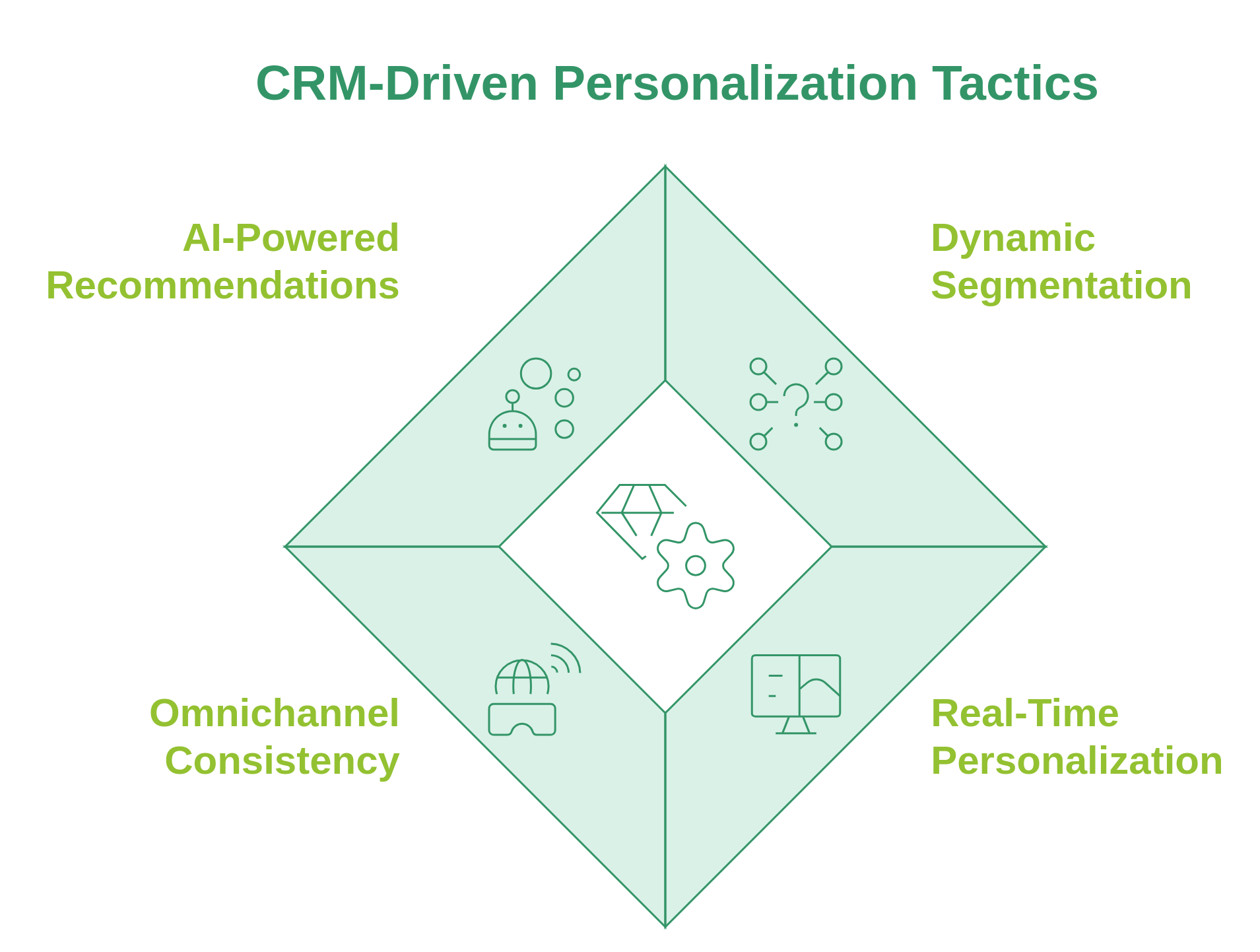
Dynamic Segmentation
Forget static audience lists. With a CRM, you can dynamically segment customers based on real-time behaviors, preferences, and intent. For example, an online clothing retailer can segment customers who browsed winter jackets but didn’t purchase into a “High Intent” group. This group can then receive retargeting ads, follow-up emails, or SMS reminders tailored to their specific interest, increasing the likelihood of conversion.
Real-Time Content Personalization
CRMs enable businesses to deliver personalized experiences in the moment. Whether it’s dynamic website content that adapts based on visitor behavior or emails that include products tailored to browsing history, CRMs make real-time relevance possible. Imagine a customer visiting an electronics store’s website to compare laptops. A CRM can personalize its homepage on subsequent visits to showcase the laptops they previously viewed, along with related accessories. This kind of immediacy keeps customers engaged and shortens the path to purchase.
Omnichannel Consistency
Personalization isn’t just about one channel—it’s about delivering a cohesive experience wherever customers interact with your brand. CRMs ensure consistency across email, chat, social media, and even physical stores. Consider a customer who contacts support via live chat about an issue with their recent purchase. When they walk into the store later, the sales associate (accessing the CRM) can address their concern without starting from scratch, offering a seamless and personalized experience.
AI-Powered Recommendations
We’ve all seen it: “People also liked…” or “Recommended for you” sections that make browsing feel tailored. These aren’t just smart guesses—they’re powered by CRM-driven AI algorithms analyzing customer preferences and purchase history. For example, a bookstore’s CRM might suggest books based on a customer’s previous purchases and genres they’ve browsed. These recommendations are not only relevant but also help customers discover products they didn’t know they wanted, driving up basket size and overall conversions.
Actionable Framework: Supercharging Personalization and Conversions with CRM
Now that we’ve explored how CRM systems drive personalization and optimize conversions, let’s dive into a clear, actionable framework to maximize their impact. Implementing these strategies can dramatically enhance customer experiences and, ultimately, boost your bottom line.
Audit and Enrich Data
Data is only as good as the quality of the insights it provides. To make sure your CRM is working at its full potential, regular audits and data cleaning are essential. Remove duplicates, update outdated information, and enrich profiles with new data to ensure you have the most accurate customer information available. For example, an e-commerce store can use CRM tools to track customers’ new interactions, adding product preferences and behavior changes into their profiles. This results in more accurate Customer Profiles that help to personalize future interactions, leading to higher conversions.
Leverage CRM for Predictive Personalization
Predictive personalization uses machine learning to anticipate customer needs before they even express them. CRMs with built-in predictive analytics can help businesses forecast future behaviors—like when a customer is likely to purchase or what product they’ll be interested in next. A clothing retailer might use CRM-driven insights to predict that a customer is likely to buy seasonal apparel, sending tailored offers even before the customer starts browsing. This proactive approach can significantly increase conversions by positioning your brand as helpful and anticipatory, rather than reactive.
Integrate CRM with Ad and Personalization Platforms
Integrating your CRM with ads and other personalization platforms is crucial for a unified personalization strategy. Sync your CRM with platforms like Google Ads, Facebook, and email marketing tools to ensure a consistent, cohesive message across all channels. For example, suppose a customer views a product on your website and adds it to their cart but doesn’t complete the purchase. In that case, CRM data can automatically trigger personalized ads on social media or emails that show the same product, offering a discount or limited-time deal to drive conversions. This seamless integration across channels ensures no customer touchpoint is missed and every interaction is personalized and timely.
Optimize Feedback Loops
The work doesn’t stop after you implement your personalization strategies. Optimizing feedback loops using CRM data is key to continuously improving your approach. By tracking campaign performance and analyzing customer interactions, you can refine and adapt your strategies to meet evolving customer needs. For instance, if a certain segment is not converting as expected, CRM insights can help you identify why. Maybe the messaging isn’t resonating, or the timing is off. With real-time data, businesses can quickly pivot and adjust strategies to improve outcomes and conversion rates.
Conclusion
CRM systems are no longer optional for businesses looking to drive meaningful personalization and optimize conversions. They are the foundational tool for building rich, actionable customer insights that empower brands to create personalized experiences at scale.As more businesses adopt CRM-powered personalization strategies, they will not only meet customer expectations—they’ll exceed them. The companies leading this transformation will set the standard for customer engagement and create lasting competitive advantages in their industries. It’s time to unlock your CRM’s true potential—because personalization isn’t just a trend, it’s the competitive edge that will define the future of customer engagement. Make your CRM your most powerful ally in converting insights into lasting business success.