The Crossroads of Marketing and Compliance
Marketing in today’s globalized environment can be described as an area of opportunity and challenge. Technological advancement and globalization have created immense opportunity now brands can talk to their customers like never before. But this open possibility is a minefield of laws that need to be followed by marketers. Starting from the General Data Protection Regulation (GDPR) in Europe to the California Consumer Privacy Act (CCPA) in the United States, those laws to guard consumer data and privacy in a world where data is abundant.
From a marketing standpoint, it is all about walking a tightrope to give customers what they want: relevant, individualized experiences while at the same time satisfying geographic-specific data regulations. Slip-ups can have a dire effect they entail big penalties, loss of reputation and consumer confidence is lost. However, compliance does not have to be blockers.
This blog will also focus on how can marketers be better prepared to meet regulations while still pushing the envelope forward. Where done correctly, compliance becomes not just a duty but a tremendous opportunity, a way to increase safety, transparency, and credibility with customers.
Understanding the Regulatory Landscape
Understanding how global marketing compliance works entails raising awareness of the major rules defining how customers’ information can be processed. Every region has its peculiarities since the general requirements for the protection of personal data depend on the culture and orientation of societies and individuals toward protection and preservation of personal information. Below is an overview of critical regulations marketers must navigate:

- GDPR (Europe): GDPR is one of the most stringent rules regulating data protection across the European Union. It requires user permission or consent for collection and processing of their data and the right to receive one’s data and delete it. Companies need to reduce how much data they gather, protect the data they do gather, and inform the government within 72 hours. Failure to observe the regulation attracts fines of up to €20 Million or 4 % of the company’s global turnover whichever is higher.
- CCPA (California): The CCPA grants California residents the right to know what personal information is being collected about them, whether their information being collected is being sold or shared, and ask for their information to be deleted. With the CPRA (California Privacy Rights Act) amendment, several others such as sensitive data processing and explanation of automated decision making are provided.
- LGPD (Brazil): As stated earlier, the Lei Geral de Proteção de Dados has just aligned Brazil’s laws with the international laws concerning data privacy. Focus was on obtaining user’s permission, informing users how the data will be used and ways by means of which users can rectify/delete their data. Penalties for non-compliance may not exceed up to 2% of the previous year’s sales in Brazil, with a maximum amount of R$ 50 million per violation.
- PDPA (Singapore): Known formally as the Personal Data Protection Bill, the Personal Data Protection Act sets the rules and regulations for the collection, use, and disclosure of personal data in Singapore. Some of its provisions covers consent, retention of data and protection of data particularly sensitive data. New changes introduce higher mandatory requirements for the reporting of the breach, and higher penalties elicited for noncompliance.
Keeping up with New Laws
What makes it even more challenging for marketers is that data privacy laws are not static practices and are rather a dynamic field. New laws like the DPDP Act in India and, China’s Personal Information Protection Law (PIPL) introduce these norms. Staying compliant demands more than one-time adherence; it requires a dynamic approach:
- Evaluating new changes on the laws of a certain region of interest.
- Speak with legal counsel and compliance professionals to get any necessary clarifications regarding the changes and how they affect compliance.
- To get familiar with the future changes in the regulations, the trends in all that is global regarding data privacy must be assessed.
Emerging Regulations
- India’s DPDP Act (Data Protection and Privacy Bill): User consent and transparency, especially for sensitive data categories. It’s still in its draft stages but is expected to have significant influence on data privacy practices in the region.
China’s PIPL (Personal Information Protection Law): Similar to GDPR, it emphasizes consent, data minimization, and user rights. It also includes data localization requirements, making it essential for companies handling Chinese citizens' data to store it within China.
Creating a Region-Specific Compliance Checklist
To manage compliance effectively, marketers should create a checklist tailored to the regions they operate in. Here’s a framework:
- Data Collection & Consent: Does your process capture consent in line with regional requirements?
- User Rights Management: Can users easily access, correct, or delete their data?
- Data Protection Mechanisms: Are your systems and processes equipped to protect data and meet breach notification obligations?
- Data Transfers: Are you prepared for cross-border data transfers and do they comply with regional regulations (e.g., Standard Contractual Clauses for EU-US transfers)?
- Ongoing Monitoring: Do you have a system to stay updated on evolving laws in all relevant markets?
Global Compliance
Operating in a global marketplace brings immense opportunities, but it also exposes marketers to significant risks if compliance is overlooked. Striking the right balance between innovation and adherence to regulations is not optional—it’s essential for long-term success.
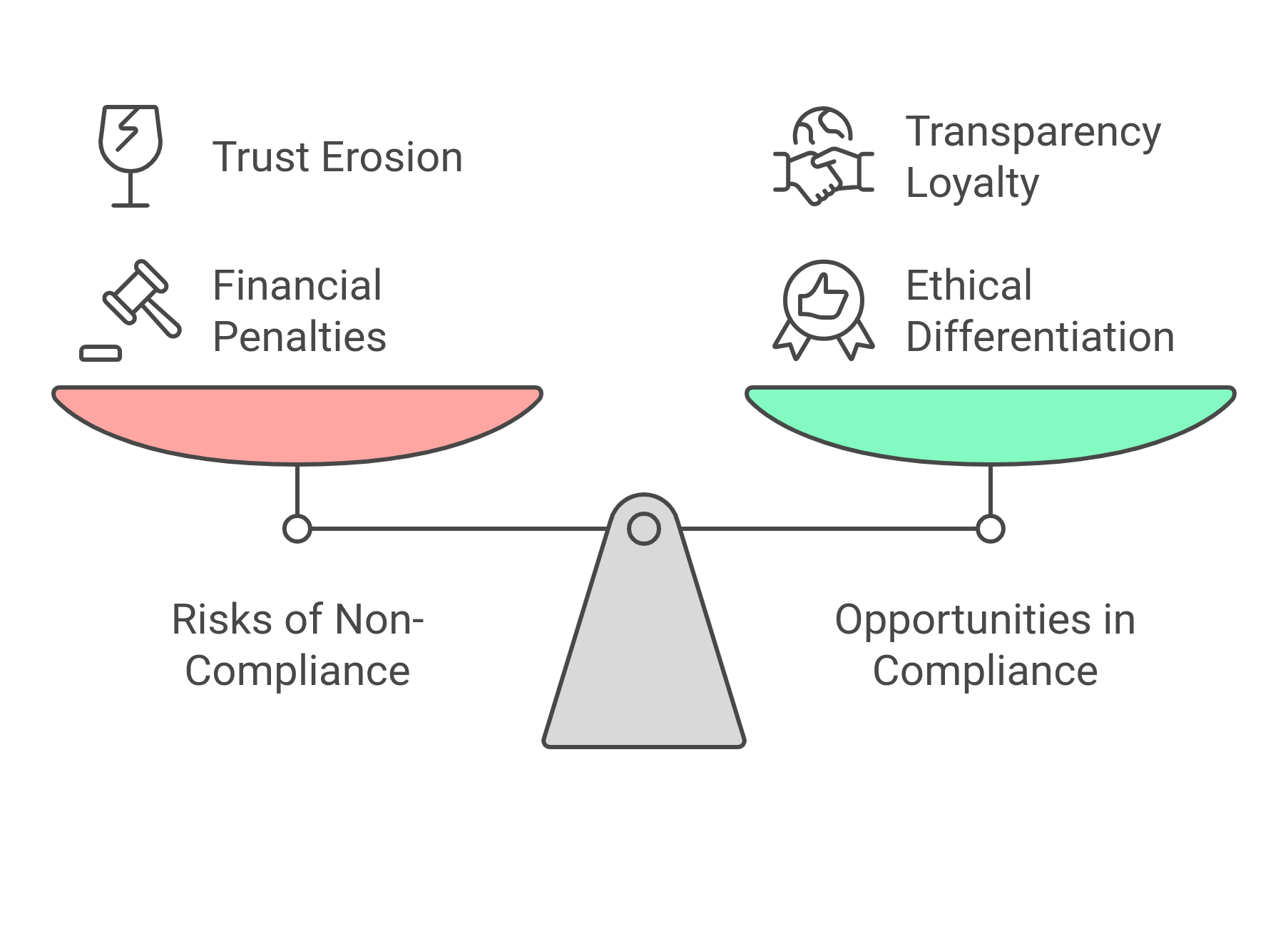
The Risks
- Financial PenaltiesRegulatory bodies are not shy about imposing severe fines for non-compliance. The GDPR, for instance, levies fines of up to €20 million or 4% of annual global turnover, whichever is greater. High-profile penalties, such as the €1.2 billion fine against Meta for transferring EU user data to the U.S., serve as stark reminders of the financial consequences of missteps.
- Customer Trust Erosion and PR CrisesNon-compliance often leads to data breaches or misuse, resulting in damaged reputations. Consumers today value privacy and ethical data handling. A publicized violation can trigger PR crises, mass customer exodus, and skepticism toward all marketing efforts, regardless of their compliance level.
Opportunities in Compliance
- Differentiation Through Ethical MarketingCompliance can set brands apart by showcasing a commitment to ethical practices. Marketers who embrace transparency and respect user rights position their brands as trustworthy, fostering competitive differentiation.
- Building Loyalty with TransparencyWhen customers feel confident that their data is handled responsibly, they are more likely to engage with a brand. Transparency in how data is collected, stored, and used fosters loyalty and strengthens relationships, creating a long-term competitive advantage.
Example
Meta’s record-breaking GDPR fine underscored the high stakes of non-compliance and the growing regulatory scrutiny on cross-border data flows. This case highlighted several lessons for marketers:
- Proactively Address Compliance Gaps: Ensure robust mechanisms for lawful data transfers.
- Invest in Privacy Infrastructure: Build systems that embed compliance into daily operations.
- Prioritize User Consent and Transparency: Explicitly communicate how data is used and stored.
Building a Compliance-First Marketing Strategy
Creating a compliance-first marketing strategy isn’t just about meeting legal requirements—it's about fostering a culture of transparency and responsibility that strengthens trust with customers. By weaving compliance into the fabric of your marketing efforts, you not only minimize risk but also position your brand as an ethical leader. Here’s a step-by-step approach to building such a strategy:
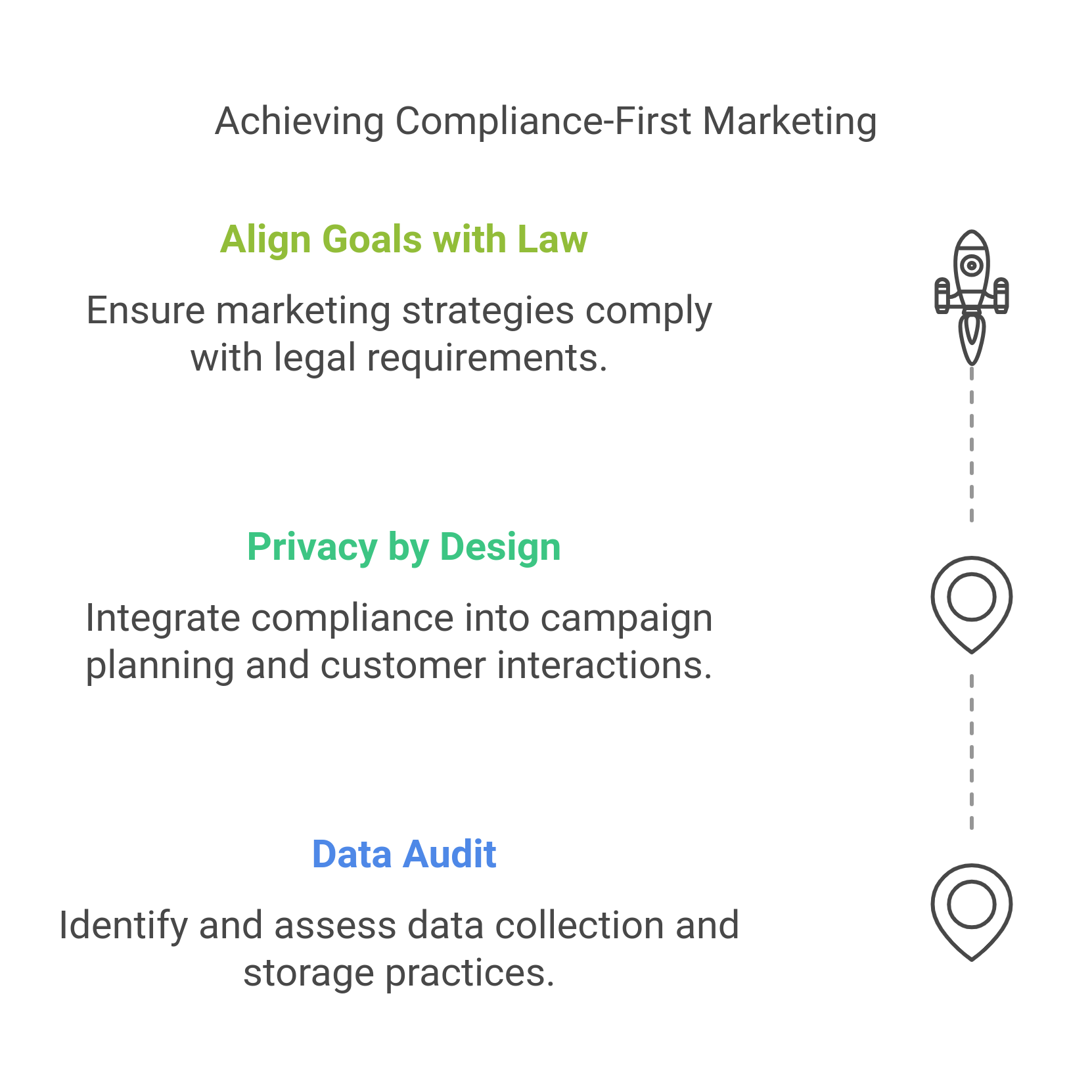
Step 1: Conduct a Data Audit
The first step in ensuring compliance is to gain a clear understanding of your data practices. A comprehensive data audit allows you to assess where you stand in terms of compliance and identify any gaps.
- Identify What Data Is Collected: Map out all customer data types you collect, including personal information, behavioral data, and sensitive data (e.g., financial, health, or racial data). Ensure that you can clearly identify the purpose for each data point collected, as per regional regulations like GDPR and CCPA.
- Where It’s Stored and How It’s Used: Document where customer data is stored (e.g., on-premise, cloud, or third-party systems). Ensure your data storage methods align with data protection laws (such as GDPR’s data localization requirements). Understand how the data is used—whether for marketing, personalization, analytics, or customer support. Knowing this will help determine if your practices are aligned with user consent.
- Assess Third-Party Vendor Compliance: If you’re using third-party services like Customer Data Platforms (CDPs) or analytics platforms, review their compliance with data privacy laws. Ensure these vendors have solid data protection measures in place and that they adhere to the same privacy standards as your brand. This includes reviewing their data processing agreements and their policies on data access, storage, and sharing.
Step 2: Implement Privacy by Design
Privacy by Design is an essential principle under GDPR and other privacy laws. It emphasizes integrating privacy protections into the design and architecture of your marketing campaigns, systems, and processes from the outset.
- Integrate Compliance into Campaign Planning: Make compliance a key consideration during the early stages of campaign planning. For instance, assess the data you’ll need to collect and ensure there’s a valid legal basis for each use. Use minimal data collection practices and ensure the data you collect is relevant and adequate for the campaign's purpose. Assess the impact on user privacy before launching any new campaign or feature.
- Embed Consent Workflows into Customer Touchpoints: Clearly inform customers about what data will be collected and how it will be used before they interact with your brand. Integrate consent forms and opt-in processes seamlessly into user journeys, especially during registration, sign-ups, or purchasing processes. Ensure that users can easily withdraw consent at any point. Consider implementing layered consent, where users can give granular consent for different types of data use (e.g., marketing communications, analytics tracking).
Step 3: Align Marketing Goals with Legal Requirements
In a compliance-first marketing strategy, it’s essential to align marketing objectives with legal requirements. Leverage first-party data (data collected directly from users) to create personalized experiences, as this data is easier to collect in a compliant way compared to third-party data. Ensure users are aware of and consent to how their first-party data will be used for personalization. This builds trust and enhances the customer experience while adhering to privacy regulations. Use privacy-preserving personalization tactics, such as anonymization and pseudonymization, to further safeguard customer information while delivering tailored content.
User Consent Done Right
Achieving compliance with data privacy regulations like GDPR or CCPA is only part of the equation. To build lasting relationships with customers, marketers must go beyond legal requirements and focus on creating a positive user experience around consent. When done right, user consent becomes a tool for building trust and fostering deeper connections, rather than just a legal hurdle.
Beyond the Legal Minimum
- Designing Clear, Jargon-Free Consent Banners
User consent forms are often the first point of interaction regarding data privacy, so it’s crucial to make them as user-friendly as possible. Avoid legal jargon or vague language that may confuse or overwhelm users. Consent banners should be concise, clear, and transparent. Let users know exactly what data is being collected, why it’s being collected, and how it will be used. A simple, direct design helps avoid friction and encourages informed choices.
Example: Apple’s Seamless Opt-In Design for App Tracking
Apple’s approach to user consent in their app tracking transparency feature is a model for marketers to follow. The prompt is clear, direct, and provides users with an immediate choice to either allow or deny app tracking. It doesn’t overwhelm them with excessive information but offers a straightforward explanation of why their data is being used.
Takeaway: Streamline consent processes and make them easy for users to understand. Giving them control over their data can lead to higher opt-in rates.
Building Trust Through Transparency
Explicitly Communicate How Data Enhances the User Experience: Users are more likely to share their data when they see the direct value it provides to them. By linking data usage to personalized and meaningful experiences, marketers can turn consent into a positive exchange. For example, explain how the data they provide helps create personalized recommendations, offers, or content tailored to their preferences. Transparency here fosters a sense of empowerment, where users understand the tangible benefits of sharing their information.
Pro Tip: Show the ROI of Sharing Data
A powerful technique is to show users how their data benefits them directly. Instead of just asking for their data, provide a clear, value-driven reason for why they should share it. For example, “Your preferences help us tailor offers just for you!” or “Sharing your interests lets us provide personalized recommendations.”
This approach positions data sharing as an exchange, where users feel that their data is being used for their benefit, not just for marketing purposes.
The Impact: From Compliance to Connection
When marketers prioritize transparency and user-centric consent, they’re not only complying with the law but also building trust. This level of trust can translate into increased user engagement, higher conversion rates, and stronger customer loyalty. By demonstrating that you value user privacy and are committed to protecting their data, you turn consent into a bridge for lasting relationships rather than just a transactional step.
Personalization Within Legal Boundaries
Personalization is a powerful tool for marketers, allowing them to deliver tailored experiences that resonate with users. However, as data privacy regulations become more stringent, it’s essential to ensure that personalization efforts remain compliant with laws like GDPR, CCPA, and others. Fortunately, there are ways to leverage personalization while respecting user privacy. By focusing on compliant data sources and using aggregated insights, marketers can continue to offer relevant, valuable experiences without crossing legal boundaries.
Compliant Personalization Tactics
- Using Zero-Party Data Zero-party data refers to information that users intentionally and proactively share with a brand, such as through surveys, preference quizzes, or feedback forms. This type of data is highly valuable for personalization, and because users have willingly provided it, it poses no compliance risk.
Using First-Party Data
First-party data is collected directly from interactions with your customers—such as their browsing behavior, purchase history, or engagement with email campaigns. Because first-party data comes from your own users, you can more easily obtain consent and ensure compliance.Example: A company uses user browsing behavior on its website (e.g., pages visited, items viewed) to recommend similar products in a personalized email campaign. Since this data is collected directly from the user’s interaction, it’s much easier to comply with privacy regulations, as long as explicit consent is obtained.
- Implementing Segment-Level Insights Without Individual TargetingTo maintain compliance, marketers can shift from personalized targeting at the individual level to using aggregated data at the segment level. This means creating broad user segments based on shared characteristics or behaviors, rather than targeting specific individuals.Example: Instead of showing an individual user a personalized recommendation based on their exact browsing history, a brand might target a segment of users who have shown interest in similar products or categories. The personalization remains relevant to the group, but it doesn't risk breaching privacy by singling out individuals.
Examples
GDPR-Compliant Personalized Recommendations
Under GDPR, personalized recommendations are allowed, but they must be based on valid consent and data processing principles.
Scenario: A user signs up for an account on a fashion e-commerce site, providing their preferences for product categories. The brand uses this zero-party data (preferences) to suggest personalized items in future email campaigns or on-site recommendations. The user is given the option to opt-out of these personalized recommendations at any time, ensuring compliance with GDPR’s right to object.
CCPA-Compliant Email Campaigns Using Aggregated Behavioral Data
The CCPA allows businesses to use data for personalization, but it mandates transparency and user control over how data is used. By using aggregated data, marketers can avoid targeting specific individuals, thus maintaining compliance.
Scenario: An online retailer uses aggregated data to send an email campaign highlighting trending products based on the collective behavior of customers who have shown interest in similar categories. This personalization avoids individual tracking and uses behavioral insights on a broader scale, reducing the risk of violating CCPA.
Tools and Techniques for Marketers
As data privacy regulations evolve, compliance becomes more complex for marketers. However, the right tools and technologies can simplify the process, enabling marketers to automate, monitor, and enforce compliance while maintaining a personalized user experience. By leveraging tech solutions like consent management platforms and AI-powered compliance tools, marketers can stay ahead of regulations and safeguard their efforts.
Essential Martech Tools
Consent Management Platforms (CMPs)
Consent Management Platforms are essential for tracking and managing user consent in compliance with data privacy laws like GDPR, CCPA, and others. CMPs streamline the consent process by allowing users to control what data they share and how it’s used. CMPs simplify the consent collection process and help marketers stay compliant across multiple jurisdictions, ensuring that user rights are respected and data is handled securely.
AI-Powered Compliance Monitoring
AI-powered tools can significantly enhance compliance efforts by monitoring campaigns and flagging potential risks in real time. These tools scan content, interactions, and data usage to identify areas where marketing tactics may conflict with data privacy regulations. AI monitoring tools automate the compliance-checking process, providing marketers with peace of mind that their campaigns are continuously in line with legal requirements.
Using AI to Scale Compliance
Automated Policy Updates for Evolving Laws
Data privacy regulations are constantly evolving, and keeping up with these changes can be time-consuming and challenging. AI can automate policy updates, ensuring that marketing teams are always using the most up-to-date legal guidelines. This automation reduces the manual burden on marketing teams, ensuring that policies are always current and aligned with the latest laws. Marketers can focus more on creating personalized experiences while remaining compliant.
How It Works:
- AI systems scan legal sources, news, and updates to track changes in global data privacy laws.
- The system automatically adjusts compliance protocols and updates policies in real time to reflect new requirements.
Predictive Modeling to Gauge Legal Risks of Personalization Tactics
Predictive AI models can help marketers anticipate the potential legal risks associated with their personalization tactics. By analyzing historical data, legal precedents, and evolving privacy trends, these models can predict whether specific marketing strategies might trigger compliance issues. Predictive modeling helps marketers proactively adjust their strategies to minimize the risk of non-compliance, allowing them to innovate while safeguarding against legal repercussions.
How It Works:
- AI algorithms assess factors like data usage patterns, user consent levels, and targeted personalization tactics to gauge the risk of non-compliance.
- The system provides risk assessments and suggests adjustments to campaigns or data collection processes to ensure compliance.
Train Your Team on Compliance
In a landscape where data privacy regulations are constantly evolving, ensuring your marketing team is well-versed in compliance is essential. Regular training programs are critical for equipping your team with the knowledge they need to navigate complex regulations and avoid costly mistakes. A well-trained team not only mitigates legal risks but also helps build a culture of transparency and trust with customers, which is key for maintaining ethical marketing practices.
Importance of Regular Training Programs for Marketing Teams
Compliance isn’t a one-time checklist—it’s an ongoing responsibility that requires continuous learning and adaptation. Regulations such as GDPR, CCPA, and others frequently undergo changes, and marketers need to stay updated on these shifts to prevent breaches and fines.
- Staying Ahead of Legal Changes: Regular training helps your marketing team understand the evolving regulatory environment and keeps them prepared to adjust strategies accordingly.
- Reducing Risk of Violations: Well-trained teams are more likely to identify compliance risks before they escalate, thus protecting your organization from financial penalties and reputational damage.
- Fostering Ethical Marketing Practices: A team well-versed in compliance is more likely to adopt ethical marketing practices that prioritize user consent, transparency, and data security, fostering customer trust.
Examples of Training Topics
- Recognizing Potential Compliance RisksMarketers need to be able to spot areas where campaigns or data collection might inadvertently violate privacy laws. Training programs should cover the common compliance pitfalls and teach teams how to avoid them.
- Ethical Marketing PracticesCompliance is not just about following laws; it’s about creating marketing strategies that are ethical and build trust with users. Training on ethical marketing ensures that your team goes beyond minimum legal requirements and develops campaigns that are user-centric and respectful of privacy.
Proactive Compliance Monitoring and Issue Management
In a world of rapidly changing data privacy regulations, proactive monitoring and swift issue management are essential for ensuring compliance. Marketers must continually audit their campaigns to identify potential risks, address compliance gaps, and be prepared for any legal challenges that may arise. By establishing a system of regular audits and creating a clear action plan for breaches, marketing teams can minimize the impact of non-compliance and safeguard their brand’s reputation.
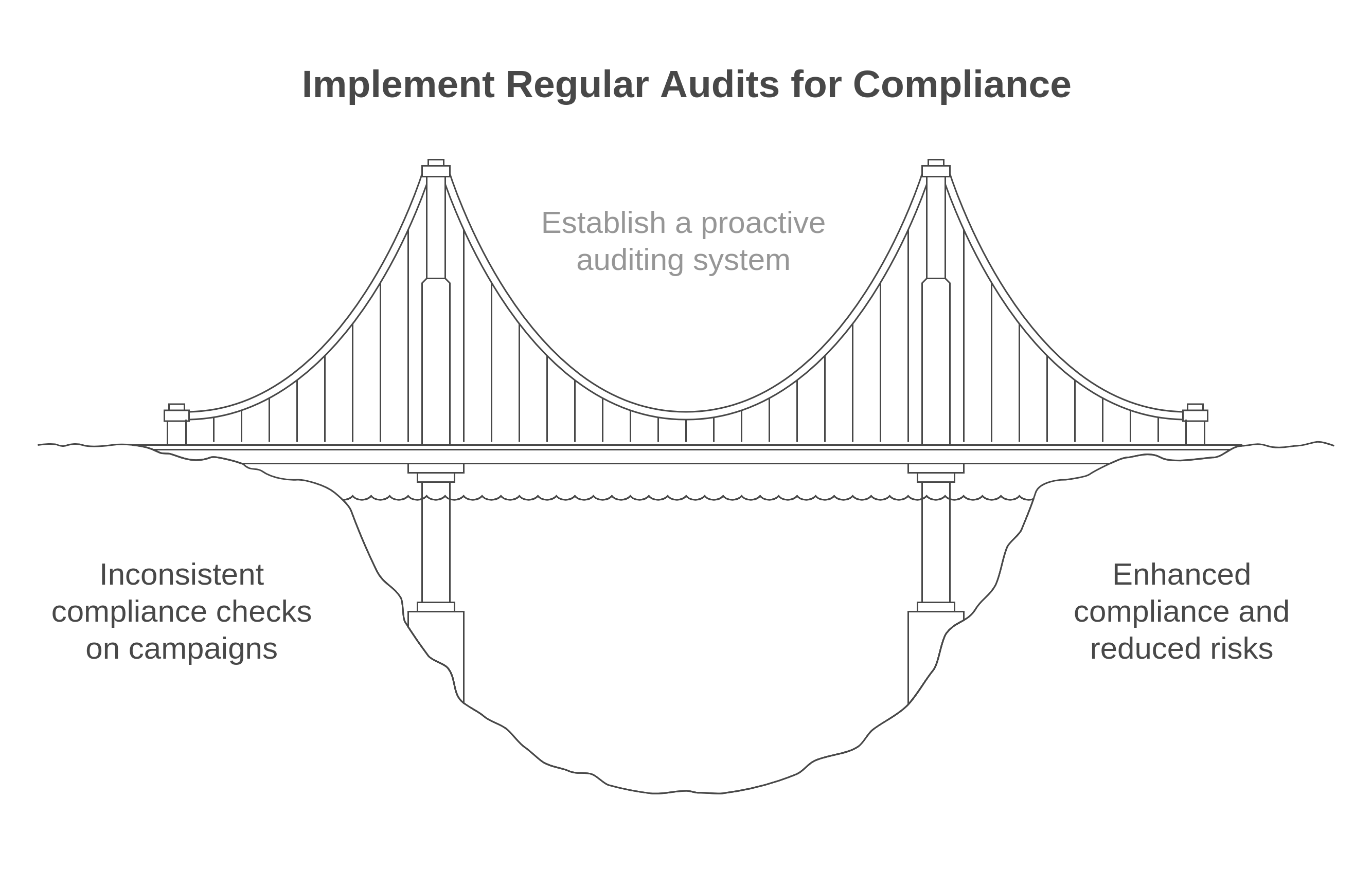
Audit Campaigns Regularly
To stay ahead of compliance risks, regular audits are crucial. Spot-checking campaigns ensures that personalization strategies are aligned with legal requirements and ethical standards. This helps marketers identify potential compliance gaps before they become major issues.
How to Audit Campaigns Effectively:
- Conduct Periodic Spot-Checks: Regularly review data collection methods, consent management, and personalization tactics to identify potential gaps in compliance.
- Evaluate Third-Party Partnerships: Ensure that vendors and platforms (such as CRM tools or analytics providers) are compliant with data privacy regulations and uphold the same standards you do.
- Check Campaign Personalization Tactics: Examine whether your segmentation, targeting, and messaging practices are consistent with data privacy laws, ensuring that no sensitive data is being used without proper consent.
Action Plan for Breaches
Even with the best preventive measures, data breaches or compliance issues can still occur. Having a clear action plan in place allows marketers to respond swiftly and effectively, mitigating damage and maintaining regulatory transparency.
- Immediate Containment Measures:
- Stop the Campaigns: If a breach is detected, halt the campaign immediately to prevent further violations of user privacy or data misuse.
- Evaluate the Scope: Assess the scale of the breach to understand how many users are affected and which specific data privacy laws have been violated.
Corrective Actions: Implement fixes and corrective actions, such as updating consent protocols, revising targeting methods, or discontinuing problematic data practices.
Transparent Communication with Regulators and Users:
- Regulator Notification: Notify relevant authorities, such as the ICO in the UK or the Data Protection Authority in your region, in line with the breach reporting requirements outlined in data privacy laws.
- User Communication: Inform affected users about the breach, the corrective measures taken, and what steps they can take to protect their data, such as resetting passwords or reviewing their privacy settings.
Benefit: A clear action plan ensures that your team is prepared to handle compliance issues swiftly, helping to minimize the risk of fines, legal actions, or brand reputation damage.
Conclusion
In an increasingly globalized and regulated marketing landscape, achieving compliance while maintaining personalized user experiences can be a delicate balancing act. By following the steps outlined in this blog—staying informed about regulations, building compliance-first strategies, integrating transparent consent workflows, and leveraging technology—marketers can successfully navigate the complex world of data privacy. Furthermore, training teams, auditing campaigns regularly, and having a clear action plan for breaches are essential in minimizing legal risks and safeguarding brand trust.
By embracing compliance as a core aspect of your marketing strategy, you can not only avoid fines and legal challenges but also build stronger, more loyal relationships with customers. Ultimately, the ability to innovate responsibly, using data ethically and transparently, will set your brand apart in today’s highly regulated digital world.