Introduction
Behavioral economics has many sublimely powerful principles, but few have been neglected more often than loss aversion. In its simplest definition, loss aversion means that we have an inbuilt inclination to avoid losses rather than the equivalent gains. One might say that some people do not mind losing; to others, loss is a hatred that is often viewed as twice as important as any gains it comes in one hand-trained on. A closer look at how this cognitive bias, usually regarded as a tiny thing in human reasoning, can be turned into a smart strategy for conversion-rate optimization. Armed with that knowledge, marketers, UX designers, and personalization developing minds can create different tools and strategies from models of motivation that get users to act.
So instead of merely viewing loss aversion as a common error of human reasoning, we will explore reframing it into a persuasive design strategy that makes psychological insights turn into real-world effects. You will understand how different brands ethically manipulate the principles of loss aversion to nudge decisions, optimize engagement, and improve conversion rates in digital contexts. This post will arm you with concrete tactics, plus real-life examples from different brands using research-backed measures, and also ethical issues that arise while applying loss aversion in areas like personalization, messaging, and conversion rate optimization campaigns. Be it designing product experiences or improving the marketing funnel, this post contains useful knowledge that will help you convert indecision and aversion into commitment.
What is Loss Aversion? Understanding the Psychology Behind It
Loss aversion is a primary concept in behavioral economics; it is the psychological inclination that the pain of loss is about twice as powerful as the pleasure of gain. Daniel Kahneman and Amos Tversky are commonly quoted: "Losses loom larger than gains." This means that when given a choice, people feel a significantly greater urge to avert a loss than look forward to an equivalent gain. For instance, the stress associated with losing $50 typically outweighs the thrill of acquiring $50: an irrational yet consistent behavioral pattern that affects decision-making in a subtle but measurable manner. In conversion rate optimization, this insight allows for possible strategies that nudge users towards action by accentuating any negatives associated with not acting as opposed to positives associated with acting.
Origin and Foundational Research
The scientific foundation of loss aversion lies in Prospect Theory, introduced in 1979 by psychologists Daniel Kahneman and Amos Tversky. Their research overturned how economists and marketers understood decision-making under conditions of uncertainty. Unlike classical economic theory, which assumes rational behavior, Prospect Theory has revealed how people actually behave—irrationally, yet predictably. In experiments, participants displayed loss aversion reliably throughout different contexts, from gambling decisions to investment and insurance applications. For example, people would reject a gamble that gave them a 50% chance of winning $100 against a $50 loss. This would happen even when the odds were actually favoring their decision. The result is that this loss-aversion effect accounts for phenomena in the real world, including panic selling as markets turn down or the inertia caused by fear of switching service providers.
Loss Aversion vs. Risk Aversion: An Overview of Differences
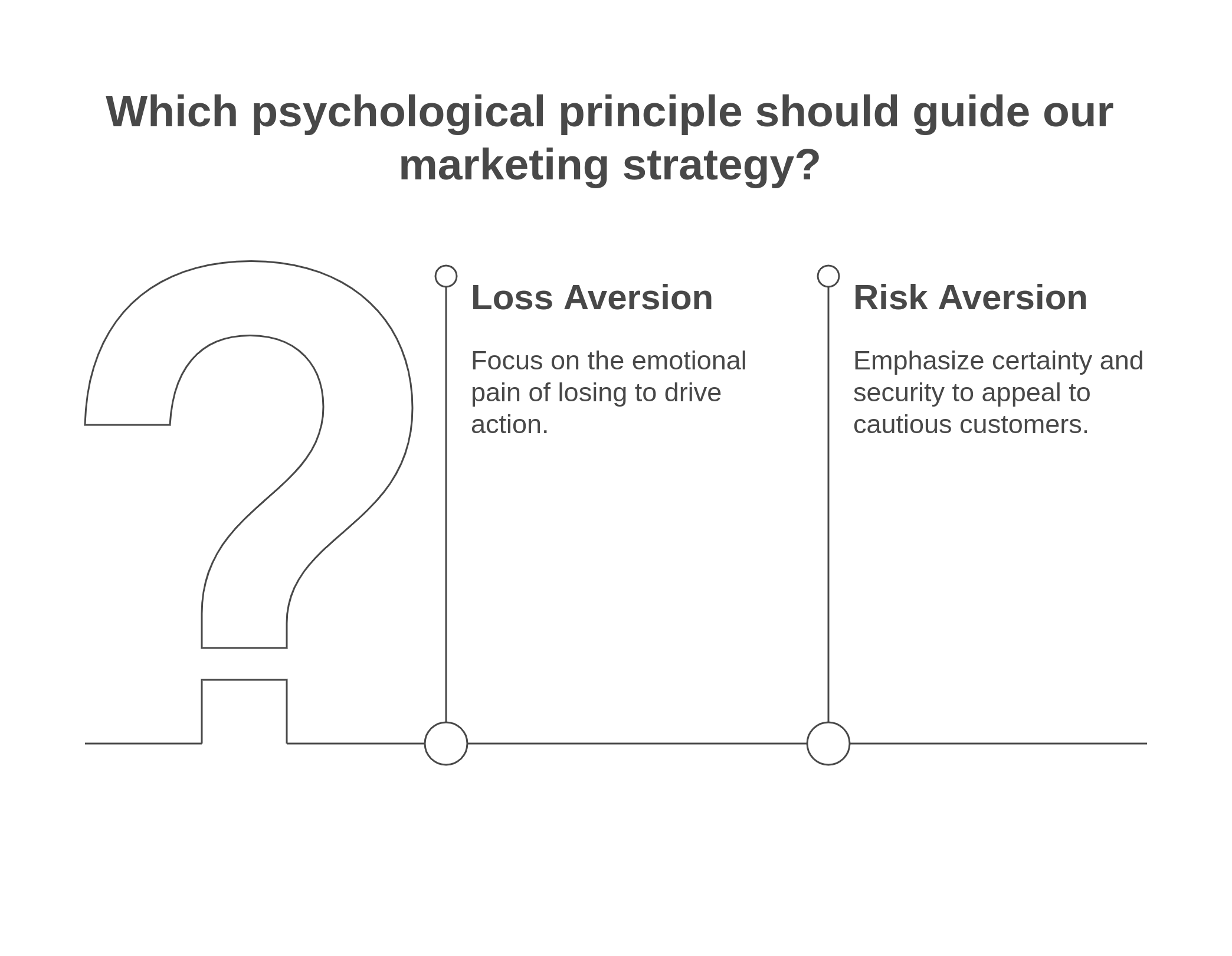
It is noted that it is wrong to think of loss aversion as equivalent to risk aversion, although this may often be the case. Risk aversion consists of a general preference for certainty over uncertainty. In other words, a person may opt for a definite outcome rather than a gamble with the same expected value. Loss aversion involves the emotional experience of that loss when something is felt to be "yours." This distinction is very important in the design of messaging, offers framing, and A/B experimentation. A risk-averse user may ignore assertive but uncertain offers, while a loss-averse one would be quick to act if perceiving that the opportunity of current gain is about to be lost. Grasping this subtlety allows marketers to tailor their personalization strategies and optimization for conversion with psychological insights that speak directly to their underlying emotional motivations.
The Neuroscience Behind Loss Aversion
But why is it that even when we know it shouldn't be so very powerful, it's the tremendous power that loss aversion has? Well, the answer is right in our heads. The next section unveils the neuroscience fueling this behavioral cognitive bias, whereby primal instincts and neurochemical reactions make us way more sensitive to potential losses than equivalent gains. To understand loss aversion's biological roots is simply a necessity if one is to really master conversion rate optimization and develop personalization strategies that work with how users think and feel in reality.
Emotional Trigger Mechanisms in the Brain
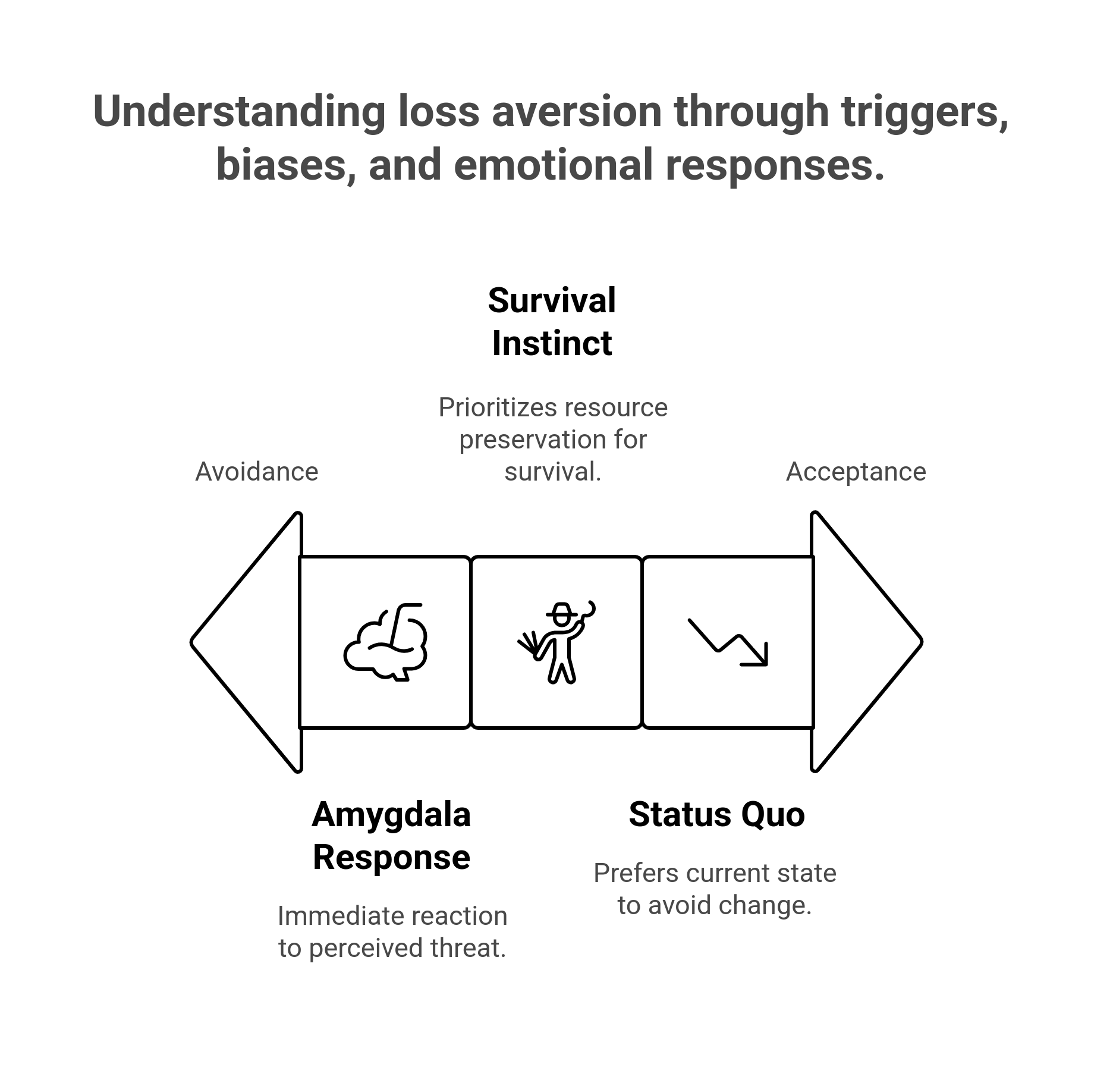
When people sense an impending loss-whether through a fleeting discount or dwindling stock, the brain not only reacts cognitively; it sympathizes with the loss. The amygdala, the alarm center for fear in the brain, quickly signifies perceived losses, sometimes preempting rational decision-making; an in-built alert for survival, it is now activated in digital experiences by subtleties like “limited time”. Neuroscientists also mention the concept of pain of paying, a major principle in neuromarketing, where spending money or relinquishing something activates the brain areas linked to the perception of physical pain. The combination of this emotional aversion with the urgency of potential loss makes for a very heavy cocktail that affects decisions on everything from cart abandonment to upsell acceptance.
Evolutionary Biases in the Direction of Loss Prevention
The loss aversion principle is not merely psychological. The evolutionary aspect of loss aversion is much older. For early man, losing food, shelter, or social standing meant life and death. The brain's wiring to prioritize saving resources over risks of gaining something is still prevalent today, although the threats have become less existential. Scarcity—when a product is sold out or when a deal is due to expire soon—arouses a primal sense of urgency. When users feel the resource can disappear, they instinctively react fast instead of considering clear-headed options. Time-bound offers and disappearing bonuses or countdown timers never fail to act; they do not simply foster FOMO. They activate the very program that has ensured our survival since time immemorial.
Cognitive Bias Reinforcement within Decision Making
Loss aversion does not exist alone; it interacts with other cognitive biases that reinforce its hold on decision-making. For instance, there's status quo bias, where there is a tendency to stick with the familiar because change is risky and may cost something. Or consider the endowment effect—once people feel ownership over something (even just virtually), they are far more reluctant to part with it. Hence, the power of the free trial or "reserve your place" CTA; it builds pretended ownership, making losing it much more painful. Also consider anchoring bias— users perceive value as based on a reference point, such as a crossed-out original price, and the loss feels even more real. These biases all overlap in a psychological net that marketers and UX designers can exploit, in an ethical manner, to precisely drive user decisions.
How Loss Aversion Affects Online Purchase Choices
If you've ever felt compelled to place an item in your cart simply because it was "almost gone" or felt a moment of panic over a fading offer, you've experienced the loss aversion effect. For digital experiences, this cognitive bias is not simply a background influence; in fact, it drives purchase behavior in many instances. This section deals with principles related to loss aversion that govern people's online decisions, such as how different offers are framed and the urgency, scarcity, and possible regret stimuli they respond to. Here is where behavioral economics meets top-line impact for marketers and CRO professionals.
Fear of Missing Out and Scarcity Features
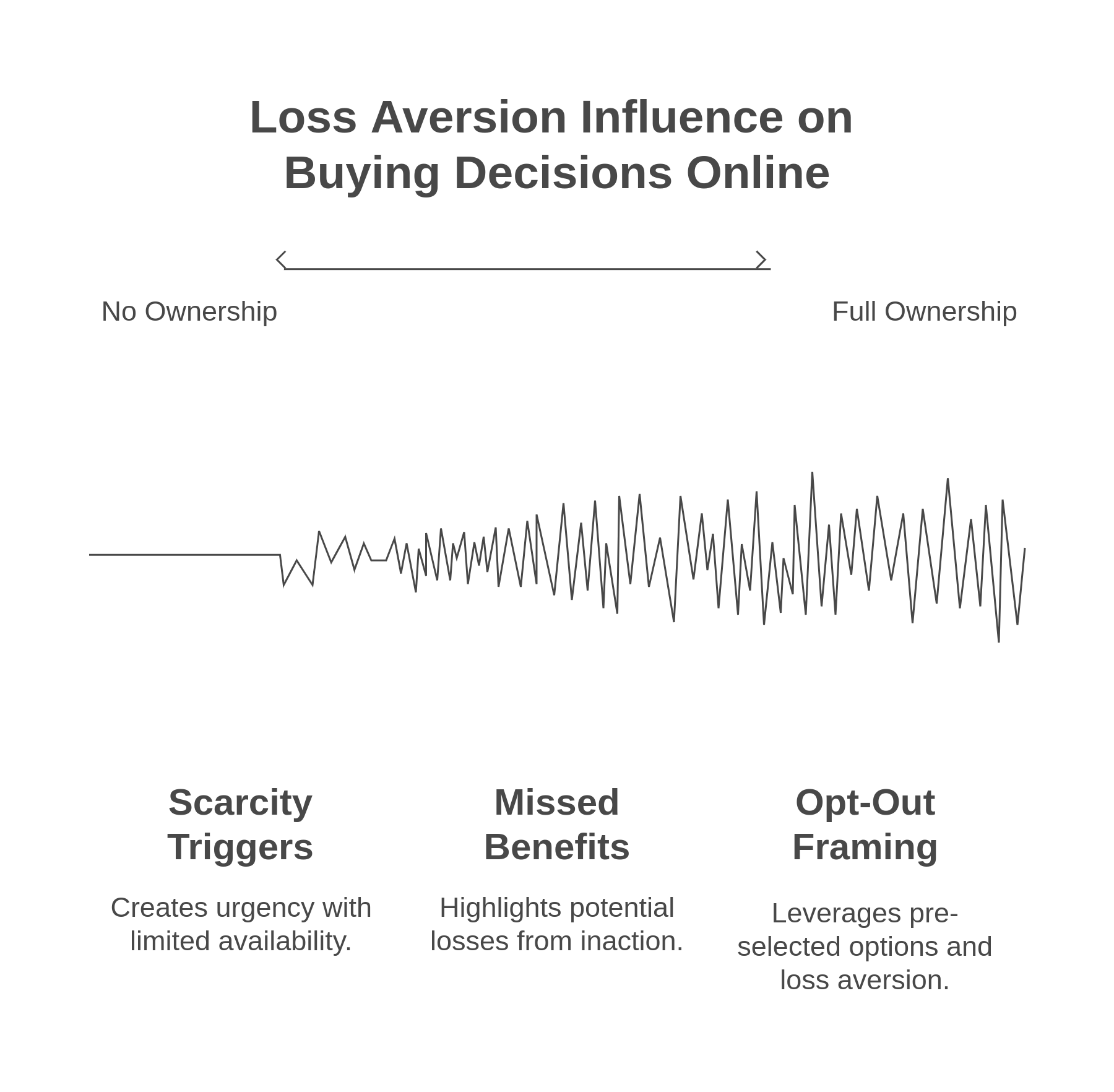
Nothing works as well as scarcity in making sure that loss aversion kicks in. Words such as "Only 3 left in stock", "Sale ends in 2 hours", create panic in the mind of the user. Just try to picture a countdown timer or a notification telling the user that product stock is low: it does add psychological and emotional pressure to the decision-making circuit of the brain. On top of that, imagine an inventory counter telling the user that "25 people are viewing this now"- this would fire up even more demand to act before it becomes too late. These scarcity cues are not entertaining per se in the world of conversion optimization; they are tools that trigger split-second decision-making at the threshold of hesitation.
Regret Avoidance as a Trigger In Change
Another quite subtle but effective application of loss aversion is considering missed opportunities as future regrets. The feeling of having made a "wrong" decision is particularly painful for people, and even more so when they were "almost right." Thus, intelligent campaigns do not consider cart abandonment or trial expiry as missed purchases only, but lost value. Example messaging includes "You’re about to lose your 20% discount" or "This offer won’t be available again," targets regret aversion, a subset of loss aversion psychological motivation toward users to finish actions simply to avoid future pain. It's not about what they gain anymore, it's about what they're going to kick themselves for losing.
The Persuading Defaults and Opt-Out Framing Power
Want to see loss aversion at its most unapparent and most effective? Check out the ways in which platforms set defaults. What happens is that when offers or services are pre-selected (bundled add-ons or auto-renewal options), users tend to leave them that way, not because they have been convinced, but because taking them off involves feeling a loss. In freemium SaaS models, users often prefer not to downgrade uploading on the premise that they do not have to use all features, but because they consider those features as belonging to them. Quite literally, the endowment effect comes into play: That is why opt-out framing drives higher conversions. People tend to resist relinquishing what could be understood as "theirs"-even though they might not have asked for it in the first place.
The Role of Loss Aversion in B2B and B2C Marketing Psychology
As is the case with consumer behavior, loss aversion is a universal psychological phenomenon influencing decision-making across industries, organizations, and purchase size. While a consumer might be alone with nothing but a shopping cart, an organization may have a boardroom full of stakeholders who need to be convinced. Understanding how B2C and B2B contexts play out for this cognitive bias is thus a key competitive edge. For each buying situation, this section discusses how to tailor the loss aversion effect, real-time personalization with the help of behavioral data, and take that impact one step further.
Loss Aversion in B2C: Direct Offers and Emotional Nudges
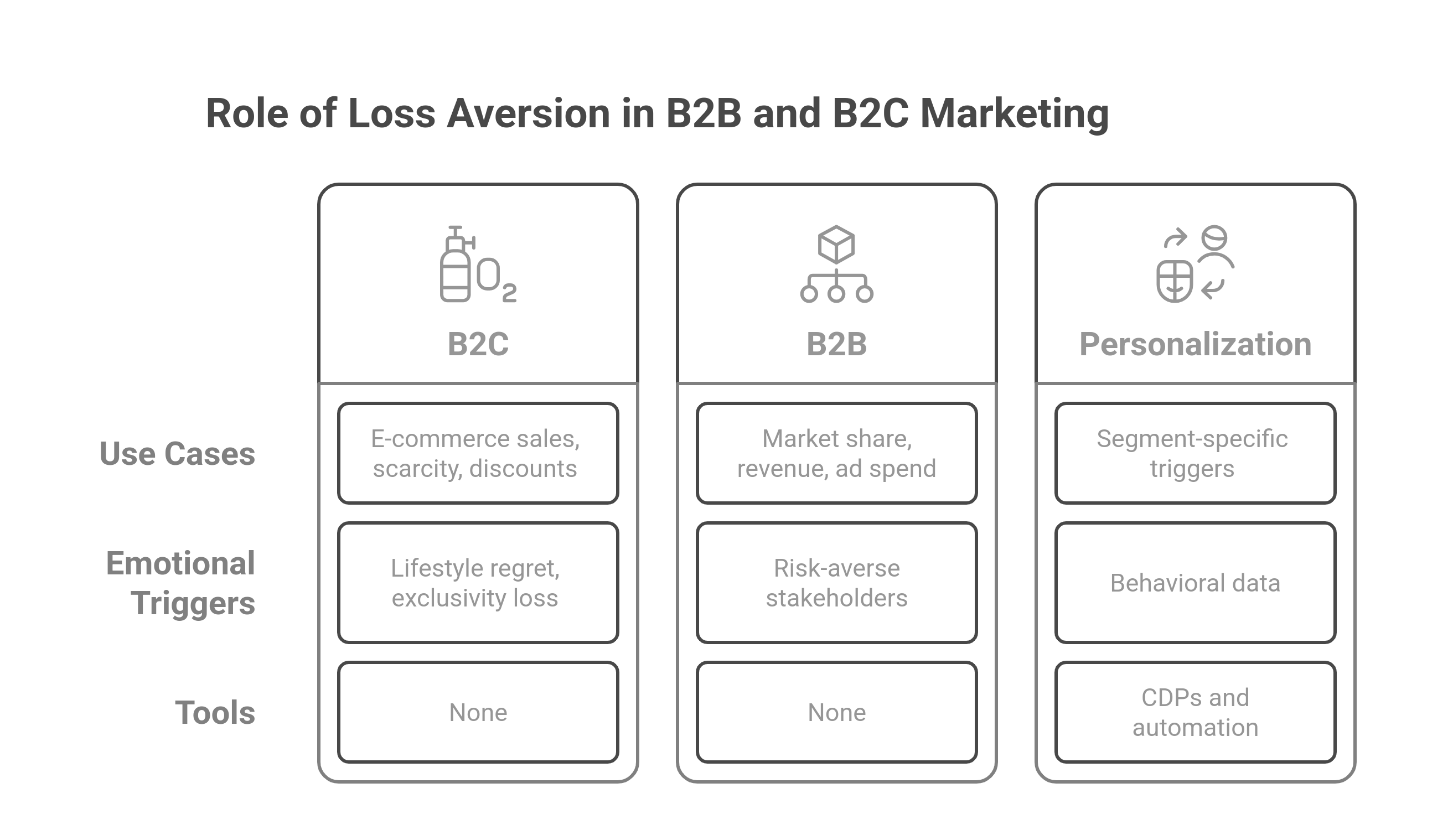
Loss aversion principles in the business-to-consumer setting are fast and extremely emotional. Flash sales, "only a few left" labels, or "last-chance" discounts—all based on the fear of regret for missed opportunities. These kinds of maneuvers tap deeper and shoot straight into the emotional arena of consumers, using feelings of scarcity and urgency to push the undecided into action. But it goes deeper: Lifestyle-centric messaging like "Don't miss your chance to live this experience" or "Only VIP members get this perk" adds a layer of emotional loss. Customers are not just worried about losing a good deal; they are worried about losing the feeling that the deal would give them. And this is where conversion rate optimization becomes even more powerful—when it works on emotional capital, not just financial savings.
Loss aversion in B2B: Risk framing and opportunity cost
B2B is a much larger arena, with less language representing something safer, more economic, or performance-oriented. B2B buyers are typically risk-averse stakeholders backed by an intimidating guard against budgetary, reputational, and outcome stakes. Here, loss aversion is manifested through risk framing: terms like "Avoid revenue leakage," "Don't lose Market share," or "Eliminate wasted ad spend" become the most effective because they represent the fear of organizational failure rather than the love of succeeding another way. You're not selling a better future; you're helping decision-makers avoid a worse one. This little shift in framing is a masterstroke of behavioral economics that enhances the persuasive communication of messages in proposals, landing pages, and outbound campaigns enormously.
Personalization Layer: Behavioral Data to Fuel Real-Time Loss Frames
So, what happens when you combine loss aversion with fine-tuned personalization? Marketing that not only converts but also compels. Using behavioral triggers, you can accomplish loss-based messaging triggered at different stages of the user's journey, different segments, or account profiles, thanks to CDPs (Customer Data Platforms) and automation engines. For example, what features will enterprise leads miss if they delay upgrading? Or reminding first-time shoppers of their expiring exclusive offer? These real-time loss aversion frames scale the emotional urgency of B2C with the strategic depth of B2B. When your messaging reflects both what matters to the user and what they stand to lose, you're not just optimizing for clicks. You're optimizing for decisions.
Where Loss Aversion Meets Personalization: Tactics that Convert
So here is the point at which you translate the theory into revenue. Combining loss aversion principles with personalized experiences would not yield nudging at all; it would somehow be mirroring the user's emotional state in real time, thus calling on behavioral science to synthesize with marketing tech and create dynamic, high-converting experiences that feel so relevant to the user. The specific tactics that apply the loss aversion principles to behavioral data, psychological copywriting, and adaptive UX design—transforming uncertain moments into conversion—will be detailed in this part.
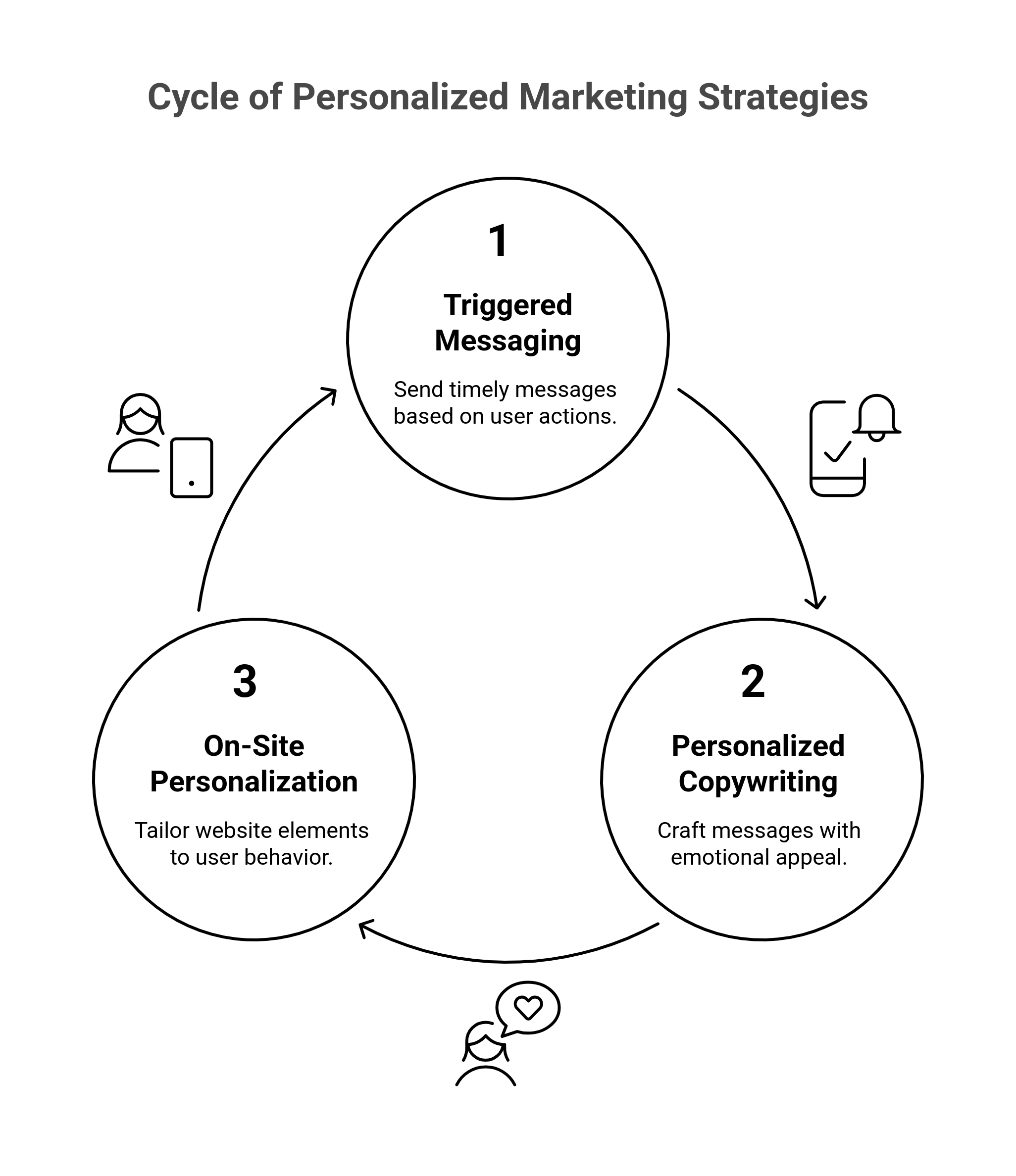
Triggered Messaging Based on User Behavior
Loss-based personalization—you are basing your on-timing strategies with the greatest persuasion on a timely trigger rooted in the user behavior. Example messages include:
“Your free trial ends in 24 hours.”
“You left this in your cart—don’t let it sell out.”
“Your reserved seat will be released in 10 minutes.”
These aren’t just mere reminders. These messages are loss aversion triggers that create emotional urgency by making a potential loss vivid and specific. When product names, personalized benefits, or individual expiration timers get inserted dynamically, the message turns from generic to disturbingly relevant. This wasn’t a weird kind of personalization. It was a more surgical type of personalization, engaging the brain’s avoidance wiring.
Personalized Copywriting with Loss-Based Framing
Words matter. Especially if they speak to something that someone fears might be lost. Strong loss aversion framing in personalized copy empowers passive language into persuasive action. A few examples include:
"Don’t miss out on your loyalty bonus—it expires at midnight."
"Avoid losing your upgrade—act now to keep premium features."
"You are leaving $40 of savings on the table."
These lines not only state what the user gets, but they also stress what might be missed. That emotional shift drives clicks. To fine-tune this approach, run A/B tests that compare soft nudges (“Claim your discount”) versus loss-based variants (“Your discount is expiring”). You’ll often find that the loss-framed version wins—and that’s the cognitive bias at work.
On-Site Personalization Use Cases
This is truly the stage at which loss aversion will excel, embedded directly into the onsite experience. Smart banners, exit-intent popups, and modals that show conditionally all allow for some intervention in real-time, based on user behavior and segmentation. Examples include:
“Leaving already? Your exclusive onboarding perks expire in 6 hours.”
“Still thinking it over? Inventory is almost gone.”
“Wait—your saved plan will be removed from your account.”
These messages are the digital equivalent of “checkpoint guards” that allow a user to abandon value at that precise moment. The end result? A conversion optimization system built not only on urgency but psychological personalization that honors the user while prompting them to act.
CRO Strategies That Leverage Loss Aversion to Improve Conversions
The tools of persuasion should foster great UX, and one among those least leveraged in the armory of persuasion would be the loss aversion effect. This is behavorial economics one-on-one: the effect which somehow stirs human consciousness into quite an intense subtle drive towards rejection of any options of missing out. In this section, we will teach you how to integrate loss aversion principles into your conversion strategy, actively transforming indecision into action on every high-intent page, within email flows, and through intelligent UX design patterns.
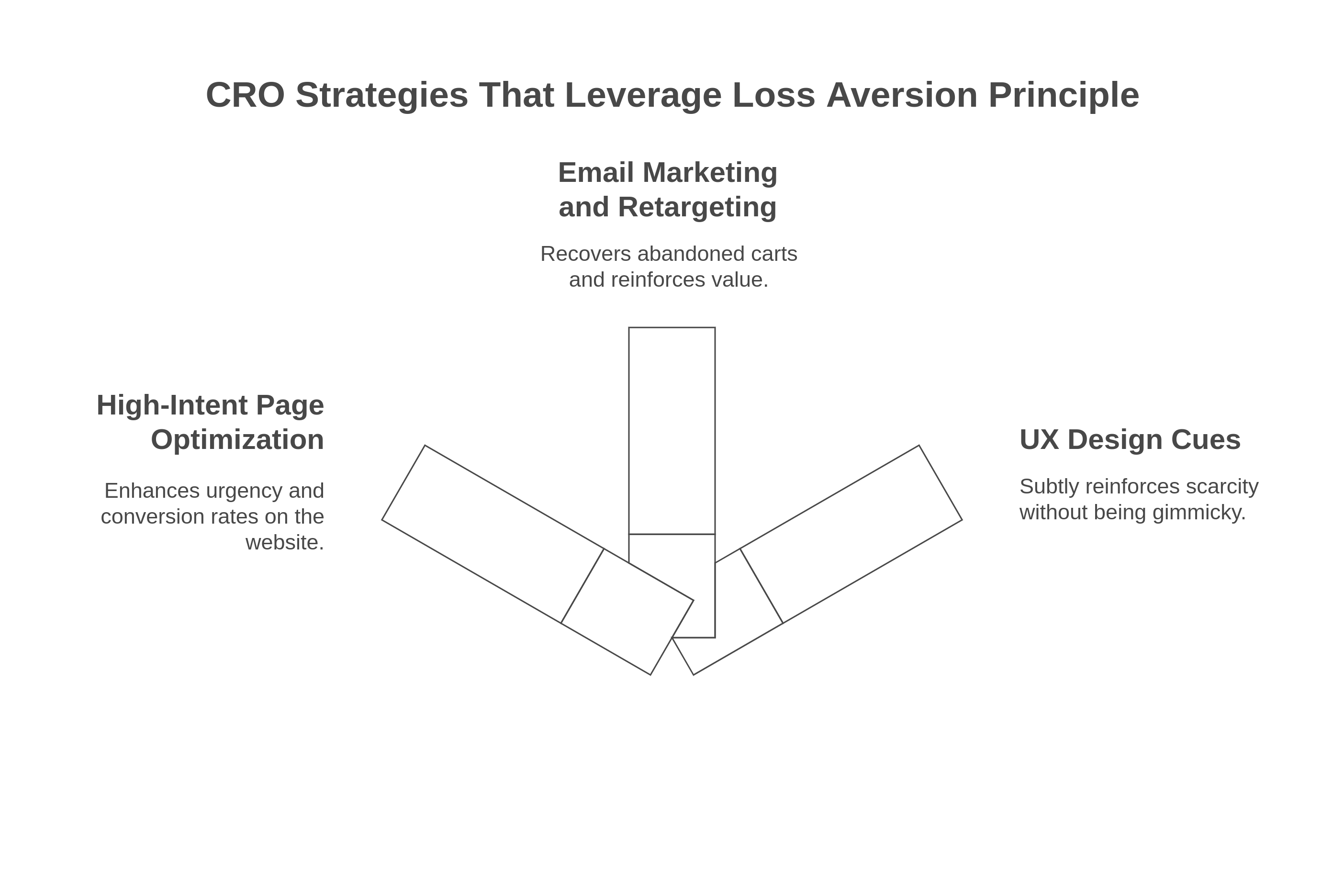
Page Optimization Tactics for High-Intent
Customers landing on a pricing page, product detail, or checkout funnel are at the brink of conversion. It's where loss aversion comes at its best—when people have skin in the game. These tactics tend to intensify urgency:
Countdown timers: "Offer expires in 3:47." Nudge by amplifying the narrowing window.
Dynamic urgency CTAs: "Reserve My Discount-Only 2 Left" implies that loss comes with inaction.
Inventory-based alerts: Real-time signals like "Only 5 items left in stock" build credibility and decision momentum.
Sticky bars: Keep sounds like "You are about to lose your offer" stuck on the screen as a permanent psychological reference.
Each tactic is designed to sharpen attention and reduce friction, reminding what users risk losing by not going ahead with their plans.
Email Marketing and Retargeting Applications
Out of sight doesn't mean out of mind. Email marketing and retargeting strategies keep the emotional costs of inaction front and center. Use loss aversion framing in lifecycle campaigns like these:
Abandoned cart reminders: “Your 20% discount disappears at midnight” or “We can’t hold this item much longer” create a sense of urgency and encourage action.
Trial reminders: “You’re about to lose access to premium features” is more compelling than “Upgrade now.”
Retargeting ads: Re-engage consumers with “You left $50 in rewards behind” or “Are you still interested? Your plan is expiring.”
These touchpoints wake up the psychological discomfort of losing something of value, instead of simply selling the benefits. This, in turn, makes users more likely to return and finish their journey.
UX Design Cues That Reinforce Scarcity Without Being Gimmicky
Not all persuasion has to shout. Smart UX design can signal scarcity and urgency with subtlety and style, reinforcing loss aversion without eroding trust. Examples include:
Progress bars on sign-up forms or limited-time offers: “You’re 80% to locking in your savings.”
Low-inventory markers that match visual hierarchy: badges like “Only 3 left” that don’t overpower, but guide the user’s eyes.
Microcopy techniques in hover states or button labels: “Secure your spot now” vs “Sign up.”
By integrating these cues natively into your design system, you're creating an environment where urgency feels like a feature, not a gimmick—and where conversion rate optimization becomes a seamless part of the user experience.
Conclusion
While a mere sideline of psychology, loss aversion is one of the strongest levers of human decision-making. One end of the emotional spectrum is the pain of missing out, while the other end is represented by a base instinct to avoid losing that which has already been deemed ours. This cognitive bias gives marketers and UX designers a unique edge in developing messages and experiences that people can relate to.
If sufficiently considered, principles on loss aversion can be applied to cart abandonment flows and B2B campaigns at an enterprise level. Whether you are orchestrating a time-bound offer, firing out alerts personalized to an individual, or just building landing pages with a lot of common sense, the whole idea is not to fool or corner the user but to help the user make an advantageous decision with more clarity and speed. With great power comes great responsibility. Weaving behavioral economics into conversion rate optimization requires consideration for more than mere conversion: what builds trust, reinforces relevance, and honors the journey of the user. When loss aversion is wielded ethically and knowingly, it becomes more than just a tactic; it becomes a competitive edge of compassion and clarity. Ready to convert smarter? Start designing for what your users are about to lose, not for what they hope to gain.